At Grace House Studio, we believe your home should be a haven—a place that feels safe, warm, and inviting. When it comes to the heart of that haven, the kitchen, the choice of materials is one of the most significant investments you’ll make.
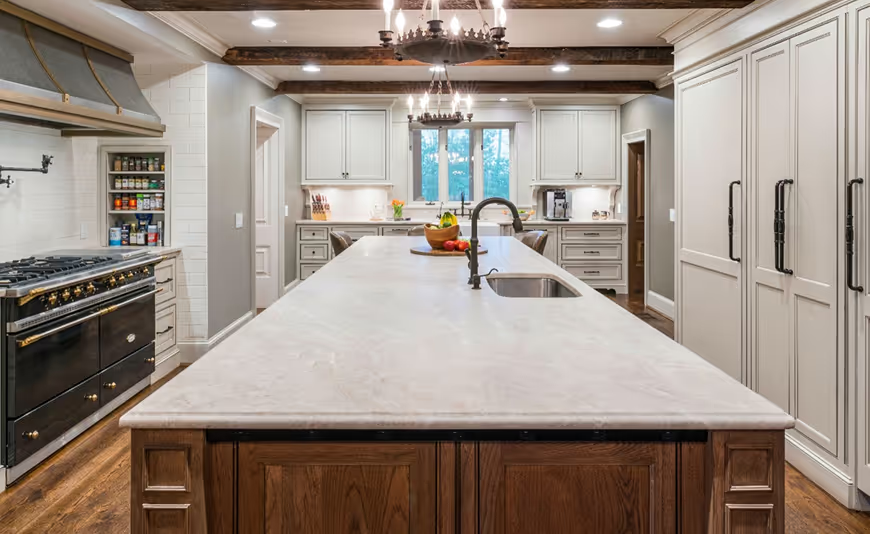
For many of our clients, the dream begins with the timeless, ethereal beauty of natural white stone. It’s a look that evokes a sense of history and quiet luxury. But as you move from the "inspiration board" to the "installation phase," a critical question arises: Marble or Quartzite? While they often look like twins on the showroom floor, their performance in a busy kitchen tells two very different stories.
If you are looking for a stone that will stand the test of time, you aren't just looking for beauty; you are looking for longevity. Let’s dive into the science and the soul of these two stones to see which one truly lasts longer.
The Contenders: A Tale of Two Origins
To understand how a stone will behave on your island, you have to understand how it was made in the earth.
- Marble: This is a metamorphic rock formed from limestone. Its primary ingredient is calcite (calcium carbonate). This is marble’s "Achilles' heel"—because calcite is chemically alkaline, it reacts instantly to anything acidic.
- Quartzite: Often confused with "Quartz" (which is man-made), Quartzite is 100% natural. It began as sandstone and, through intense heat and pressure, was fused into a solid mass of quartz crystals.
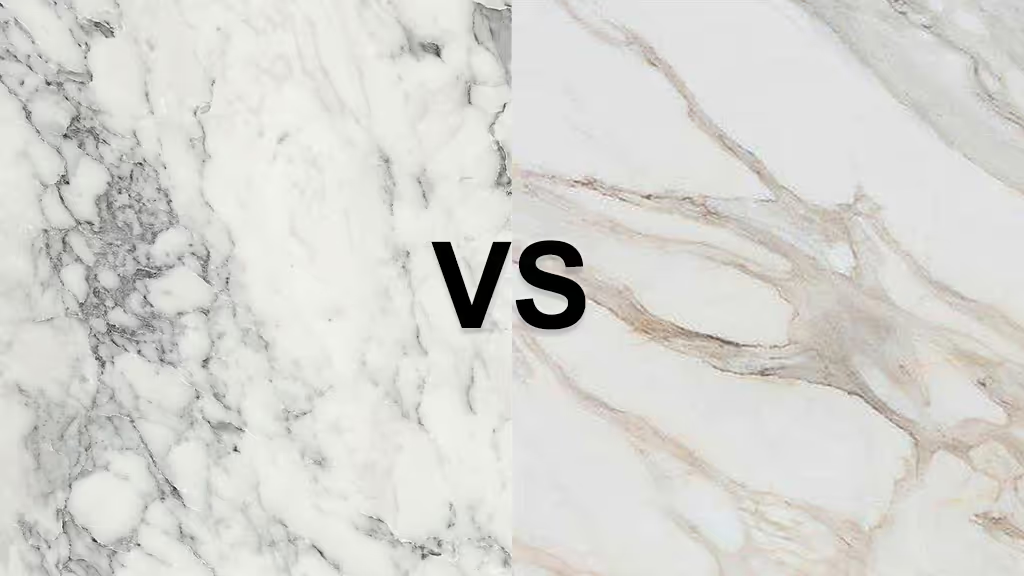
While both stones offer that coveted "marble look" with soft grey veining and milky backgrounds, their chemical "DNA" dictates their durability.
The Showdown: Hardness and Scratch Resistance
In a functional kitchen, your countertops are a workspace. They encounter knives, heavy cast-iron pans, and the occasional dropped ceramic mug.
Quartzite is one of the hardest materials on earth—harder than glass and even harder than granite. It is virtually impossible to scratch during normal kitchen activities. Marble, being much softer, can develop "battle scars" over time.
If "lasting longer" means maintaining a smooth, scratch-free surface, Quartzite is the clear winner.
The Etching Enigma
Perhaps the most misunderstood aspect of natural stone is etching. Many homeowners see a dull spot on their marble and think it’s a stain. In reality, it’s an etch—a physical change in the stone’s surface caused by an acid (like lemon juice, vinegar, or wine) eating away at the calcite.
Because Quartzite is made of silica rather than calcite, true Quartzite does not etch. You can spill a margarita on a Quartzite counter, leave it overnight, and the stone will remain unharmed. For a family that loves to cook and entertain, this "peace of mind" factor is a significant part of a stone's functional longevity.
A Grace House Studio Tip: Beware of "Soft Quartzites." Some stones labeled as quartzite in the industry are actually dolomitic marbles. They are harder than standard marble but will still etch. Always ask your fabricator for a "lemon test" sample before you commit.
Porosity and Staining
Longevity isn't just about physical damage; it’s about how the stone holds its color. Both marble and quartzite are natural stones, which means they are porous to some degree. However, the metamorphic process that creates quartzite typically results in a much denser, tighter grain structure.
- Marble is like a sponge. If it isn't sealed perfectly, a splash of red wine can seep deep into the pores, becoming a permanent part of the stone.
- Quartzite is significantly less porous. While we still recommend sealing it, the window of time you have to wipe up a spill is much longer.
The "Patina" Factor: What Does "Lasting" Mean to You?
When we talk about which stone lasts longer, we have to define what "lasting" looks like.
If your definition of a long-lasting countertop is one that looks exactly as it did the day it was installed for the next 20 years, Quartzite is your soulmate. It is a "set it and forget it" luxury stone.
However, if you find beauty in the way a material evolves, Marble has its own form of longevity. Think of the ancient bistros in Europe or the statues in Italy. The scratches and etches on marble eventually blend together into what designers call a "patina." For some, this aged look tells a story of a life well-lived. If you can embrace the patina, marble can "last" for centuries, getting more character with every passing year.
Maintenance Reality Check
At Grace House Studio, we believe in being intellectually honest about the "work" required for beauty:
- Sealing: Marble needs to be sealed every 6 months to a year. Quartzite usually only needs it every 1 to 3 years.
- Cleaning: Both require pH-neutral cleaners. Avoid Windex or vinegar at all costs!
- Repair: Because marble is soft, it can be professionally "re-honed" to remove scratches and etches. Quartzite is so hard that if you do manage to chip it, it is much more difficult (and expensive) to repair.
The Final Verdict
Which natural stone countertop lasts longer?
In terms of technical durability, resistance to daily wear, and retaining its "new" look, Quartzite is the undisputed champion. It offers the high-end aesthetic of marble with the rugged performance of granite, making it the superior choice for high-traffic, "working" kitchens.
However, Marble remains the queen of timelessness. If you are a "neat freak" who will be stressed by a watermark, skip the marble. But if you view your home as an evolving piece of art, marble’s beauty is unmatched.

%20%40dnicoledesignstudio.webp)