
Few decisions in a kitchen remodel carry as much weight as this one. The choice between an open concept layout and a closed or semi-closed kitchen affects how your home feels every single day — how you cook, how you entertain, how noise and smells travel through your living space, and how your home presents to future buyers.
It's also a decision that's harder to reverse than almost any other in a remodel. Removing a load-bearing wall to open up a kitchen is a significant structural undertaking. Closing off an existing open plan is equally disruptive. Getting this right before the project begins matters enormously.
At Grace House Studio, we work with homeowners across Alexandria, Arlington, Fairfax, and beyond on full kitchen remodels where layout is often the most consequential early decision. This post will walk you through the honest advantages and real drawbacks of both approaches — so you can decide with clarity rather than trend pressure.
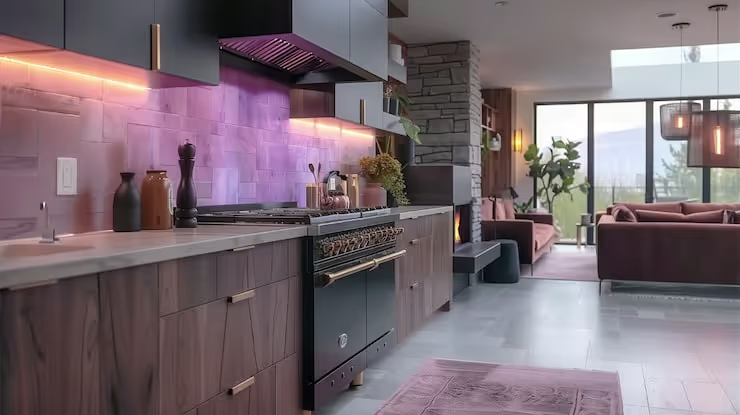
What We Mean By Open Concept vs. Closed Kitchen
Before we get into the comparison, let's define our terms clearly — because "open concept" means different things to different people.
A fully open concept kitchen is one where the kitchen flows directly and continuously into the living and/or dining room with no visual or physical separation. No walls, no doors, no distinct boundary.
A closed kitchen has four walls and a door or doorway that separates it from the rest of the home. Common in older Colonial and Craftsman homes throughout Northern Virginia, this layout treats the kitchen as its own dedicated room.
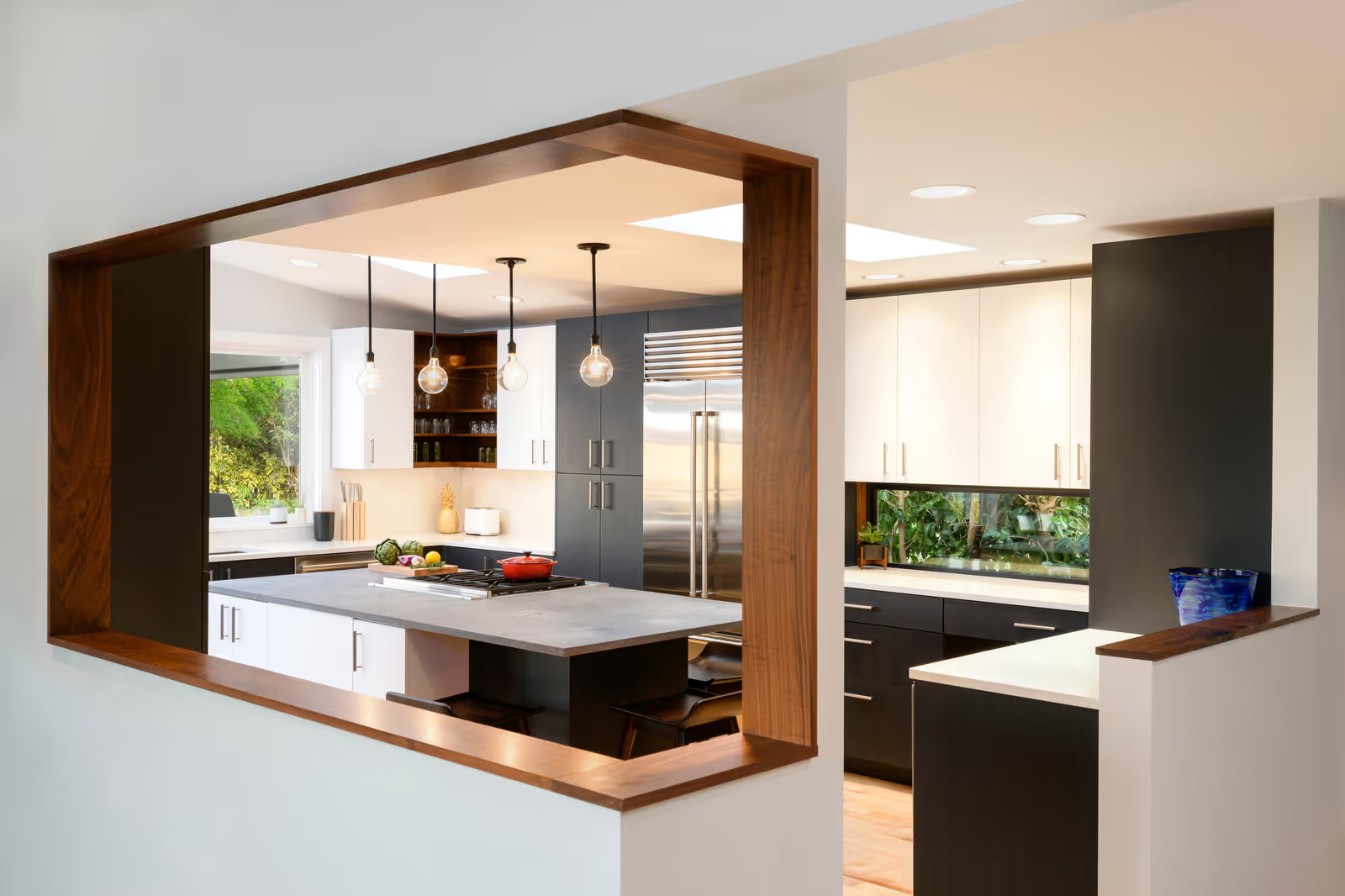
A semi-open or transitional kitchen sits between the two — partial walls, islands that define the boundary, or wide openings that connect the spaces without fully merging them. This hybrid approach is increasingly popular and worth serious consideration as a middle path.

The Case for Open Concept: Why It Dominated the Last Two Decades
There's a reason open concept kitchens became the dominant design preference from the 2000s through the early 2020s. When executed well, they genuinely deliver on their promises.
1. The Social Kitchen Experience
The most compelling argument for open concept is social. When the kitchen opens into the living and dining space, the cook is part of the gathering rather than isolated behind a wall. You can prepare dinner while watching the kids, carry on a conversation with guests, and feel connected to the life of the home rather than sequestered in a service room.
For families with young children in particular, this visibility and connection is a genuine daily quality-of-life benefit. You can see what's happening in the living room while you're at the stove — and that matters more than most design considerations when you're in the thick of it.
2. Natural Light and Perceived Space
Open plan layouts allow natural light to travel freely across a much larger combined space. A kitchen that once felt dark and enclosed can feel bright and spacious simply by removing the wall that separates it from a south- or east-facing living room. In Northern Virginia's mix of older stock homes — many of which have smaller, compartmentalised kitchens by today's standards — this transformation can be genuinely dramatic.
The perception of space also increases significantly. Even a modest kitchen feels larger when the visual boundary extends into the adjacent room, and that sense of openness is something both homeowners and buyers respond to strongly.
3. Resale Appeal in the NoVA Market
In the Northern Virginia real estate market, open concept kitchens have been consistently popular with buyers for years. Properties where the kitchen flows into the living space tend to photograph well, feel welcoming during walkthroughs, and align with the lifestyle expectations of a broad range of buyers. If resale value is a significant consideration in your remodel decision, the open concept has historically been the safer commercial bet.
4. Flexibility for Entertaining
For homeowners who entertain regularly, open concept layouts offer a flexibility that closed kitchens simply cannot. Guests can move between kitchen, dining, and living spaces naturally. The host can remain engaged with the room rather than disappearing into the kitchen between courses. Large gatherings flow more comfortably when the spaces are connected.

The Real Drawbacks of Open Concept (Ones the Magazines Don't Always Mention)
The honest truth is that open concept kitchens come with real trade-offs that many homeowners only fully appreciate after living with the layout. In the last few years, there has been a genuine and notable shift back toward closed or semi-closed kitchens — and the reasons are worth understanding.
1. Cooking Smells Travel — Everywhere
This is the open concept problem that no amount of aspirational photography addresses. When your kitchen is fully integrated into your living space, every smell it produces — garlic, fish, curry, last night's takeaway — travels freely and immediately into the rooms where you relax, watch television, and entertain. Even with a powerful range hood directly above the cooktop, ambient cooking odours in an open plan home are unavoidable.
For homeowners who cook frequently and love bold flavours, this is a meaningful daily quality-of-life consideration. A closed or semi-closed kitchen largely contains these smells to the cooking space, leaving the living areas fresher.
2. Noise Has Nowhere to Go
The same principle applies to sound. Extractor fans, dishwashers, blenders, the clatter of pots and pans — in an open concept kitchen, these sounds are part of the ambient soundtrack of your entire living space. If someone is cooking while someone else is trying to work from home, help children with homework, or simply watch television without raising the volume, the open plan becomes a source of daily friction rather than connection.
3. The Kitchen Is Always "On Show"
There's an aesthetic expectation that comes with an open concept kitchen: it needs to look good all the time. Dishes waiting to be washed, cluttered countertops, appliances left out, a pile of post on the island — in a closed kitchen, these are invisible to guests in the living room. In an open plan, they're part of the room. For homeowners who prefer a relaxed approach to kitchen tidiness, the permanent visual exposure of an open concept can create a low-level but persistent anxiety that wears on you over time.
4. Heating and Cooling Efficiency
Open plan spaces are larger combined volumes to heat and cool, which can affect energy efficiency. In Northern Virginia's hot summers and cold winters, the ability to zone your home's climate control becomes more difficult when the kitchen, dining, and living areas are one continuous space. This is rarely a dealbreaker, but it's worth factoring into the long-term operating cost of your home.
5. Wall Space for Storage Disappears
A practical concern that's easy to overlook in the planning phase: open concept kitchens lose walls — and walls are where storage lives. Removing the wall between your kitchen and living room may eliminate the space for a pantry cabinet, a tall refrigerator in a recessed alcove, or a full run of upper cabinets. If your kitchen remodel is already working with limited square footage, losing storage wall space can create functional problems that are harder to solve than they look on a floor plan.
Our blog post on base cabinets, wall cabinets, and pantry cabinets goes into detail on how to maximise storage within whatever footprint you're working with — worth reading before you finalise your layout.

The Case for a Closed Kitchen: Why It's Coming Back
The closed kitchen is not simply a relic of the past. It's a layout that solves real problems — and one that's experiencing a genuine resurgence among thoughtful homeowners who've lived in open concept spaces and want something different.
1. Containment Is a Feature, Not a Bug
The ability to close a door on a messy kitchen at the end of a long day is not a small thing. It's the freedom to not perform tidiness every hour of every evening. Closed kitchens give homeowners permission to have a working, lived-in space rather than an Instagram-ready showroom — and for many people, that's a daily quality-of-life improvement.
2. A Dedicated Cooking Environment
Professional kitchens are closed for a reason. They're optimised for the work of cooking — concentrated, focused, and separate from everything else. A closed kitchen allows you to fully inhabit the cooking experience when you want to, and to leave it behind when you don't.
3. Better Acoustics and Atmosphere Throughout the Home
When the kitchen is separate, the living room, dining room, and home office have their own acoustic identities. Music, conversation, television, and work can coexist with cooking without competing. For households where different family members have different schedules and needs, this separation is a genuine daily benefit.
4. Design Freedom in Both Rooms
A closed kitchen and a closed living room are both free to have their own distinct design identities. You don't need to coordinate finishes, colour palettes, and furniture styles across a single unified space. The kitchen can be bold and functional; the living room can be calm and curated. Both can be exactly what they need to be without compromise.
The Best of Both: The Semi-Open Compromise
For many Northern Virginia homeowners, the most satisfying answer is neither fully open nor fully closed — it's the semi-open layout that creates connection without full integration.
Common semi-open approaches include:
The pass-through opening — a wide, intentional opening between the kitchen and living or dining room that allows visual connection and light flow without fully merging the spaces. Large enough to feel connected, bounded enough to contain smell and sound.
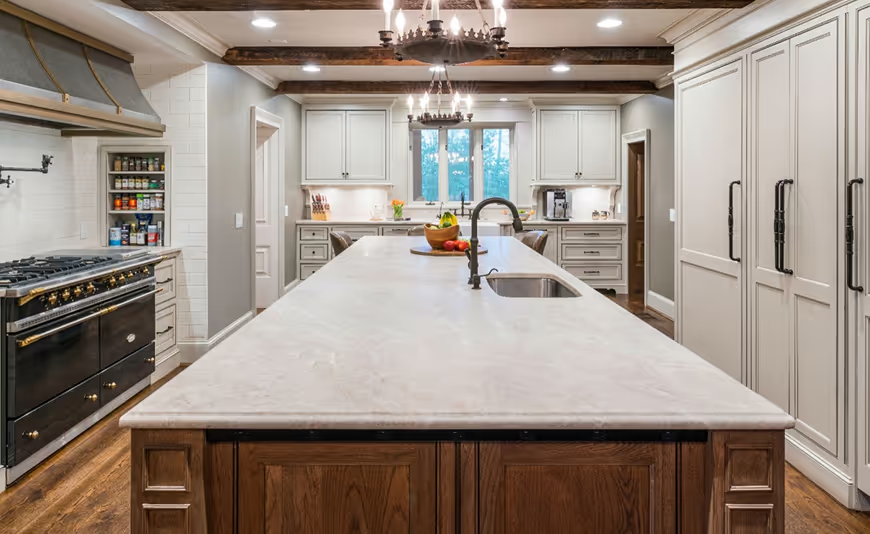
The island boundary — in homes where the kitchen flows into a great room, a large, well-designed kitchen island can define the edge of the kitchen zone without a physical wall. The cook is visible and connected to the room, but the spaces retain a sense of distinct identity.
The pocket door or barn door — a doorway wide enough to feel genuinely open when the door is pulled back, but closeable when you need containment of noise, smells, or mess. This is one of the most practical solutions we recommend to homeowners who are genuinely torn between the two layouts.
Partial wall with a breakfast bar — removing the upper portion of a wall while keeping the base creates a bar-height counter that preserves some separation while opening up the sight line. The wall stub also provides storage and mounting surface for upper cabinets or shelving on the kitchen side.
Questions to Ask Yourself Before You Decide
Rather than following a trend, the best layout decision comes from honest reflection on how you actually live. Work through these questions before committing:
How do you cook? If you cook daily and love bold, aromatic food, containment matters. If you rarely cook from scratch, open concept's drawbacks are largely hypothetical for your household.
How do you entertain? Regular hosts who want guests in the kitchen during prep will love open concept. Homeowners who prefer a clear separation between preparation and presentation may prefer closed.
Who else is in the home? Remote workers, students, young children, and multi-generational households all have specific acoustic and visual privacy needs that a layout decision will affect every single day.
How tidy do you keep your kitchen? Be honest. If your kitchen is clean and clear most of the time, open concept works beautifully. If it's more realistically a working, lived-in space, the exposure of open plan may create daily stress.
What does your home's architecture suggest? Older Colonial, Craftsman, and Federal-style homes throughout Northern Virginia were built with closed kitchens as part of their architectural logic. Fighting against that logic — removing structural walls, rerouting plumbing and electrical — can be expensive and disruptive. Sometimes the smartest remodel honours the bones of the house rather than working against them.
What We Recommend at Grace House Studio
There is no universally correct answer here. What we consistently find in our design consultations is that the homeowners who are happiest with their kitchen layouts are the ones who made the decision based on how they actually live — not how they imagine they might live, or how the most popular layout happens to look on Pinterest.
If you're leaning toward open concept, we'll help you think through storage loss, structural considerations, and how to use islands, countertops, and cabinetry to create definition within the open space. If you're drawn to a closed or semi-closed layout, we'll help you maximise light, storage, and connection through smart design choices that make the kitchen feel generous rather than confined.
Browse our completed kitchen projects in Alexandria and Charlottesville to see how different layouts translate into real, finished spaces. Then when you're ready to talk specifics, contact Grace House Studio for a free in-home consultation — we'll come to you, look at your actual space, and help you land on a layout decision you'll be happy with for years to come.
%20%40dnicoledesignstudio.webp)