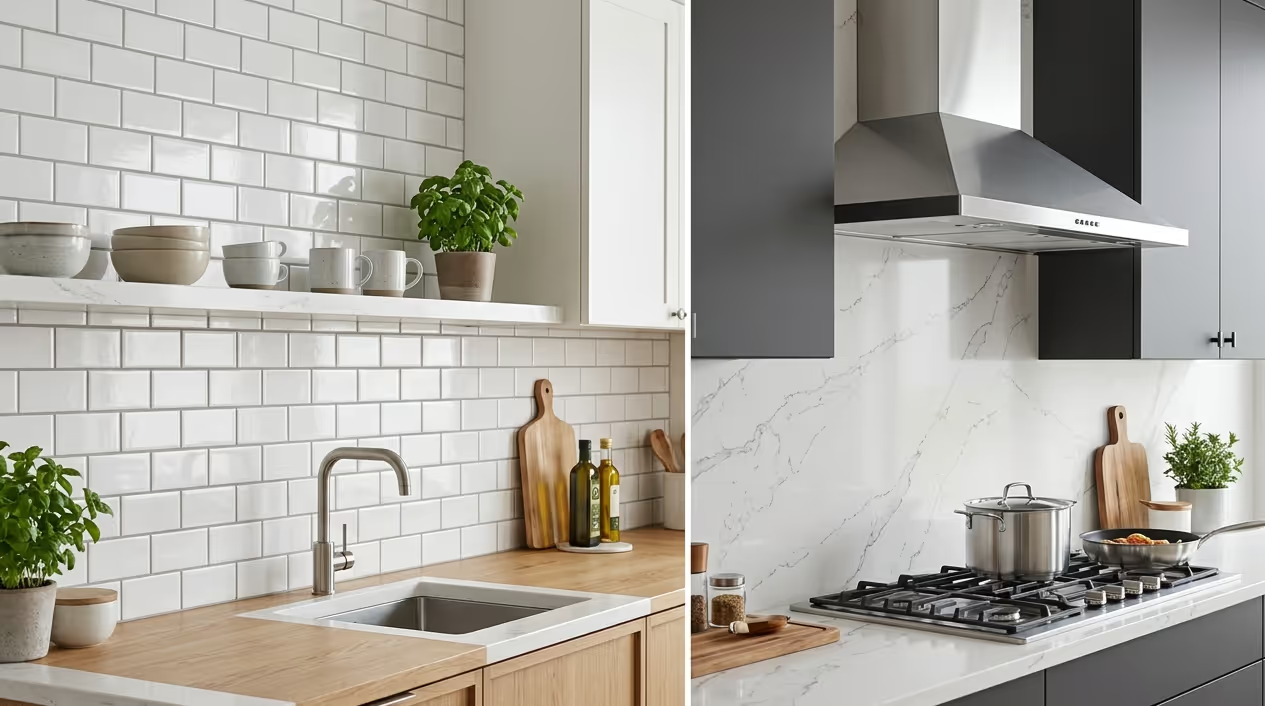
The backsplash is one of the most personal design decisions in any kitchen remodel. It sits at eye level, it occupies the most visible surface in the room, and it is in constant visual conversation with your countertops, your cabinets, and your hardware. Done well, a backsplash ties an entire kitchen together. Done without care, it becomes the element that makes an otherwise beautiful kitchen feel slightly unresolved.
In 2026, Northern Virginia homeowners are increasingly presenting their designers with a meaningful choice that didn't feel quite as relevant a few years ago: tile backsplash or slab backsplash? Both are beautiful. Both are popular. Both have genuine strengths and real limitations. And the decision between them has a significant effect on the look, the feel, the maintenance, and the cost of the finished kitchen.
At Grace House Studio, we work through this decision with homeowners across Northern Virginia on every kitchen project we take on. Here is our honest, detailed breakdown of the tile vs. slab backsplash decision — so you can make the right choice for your home with confidence.
What Is a Slab Backsplash?
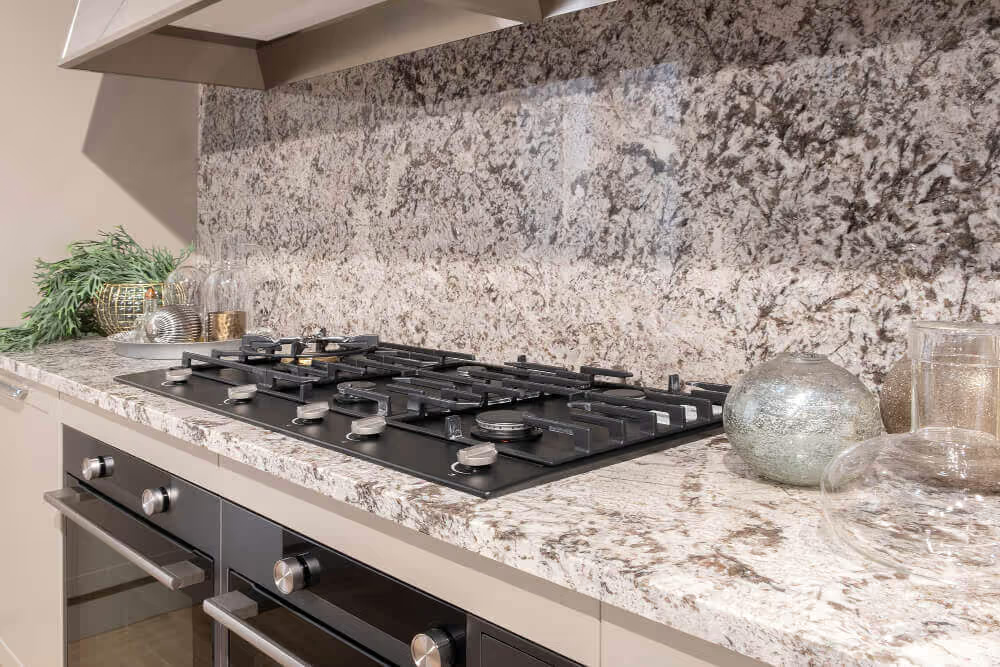
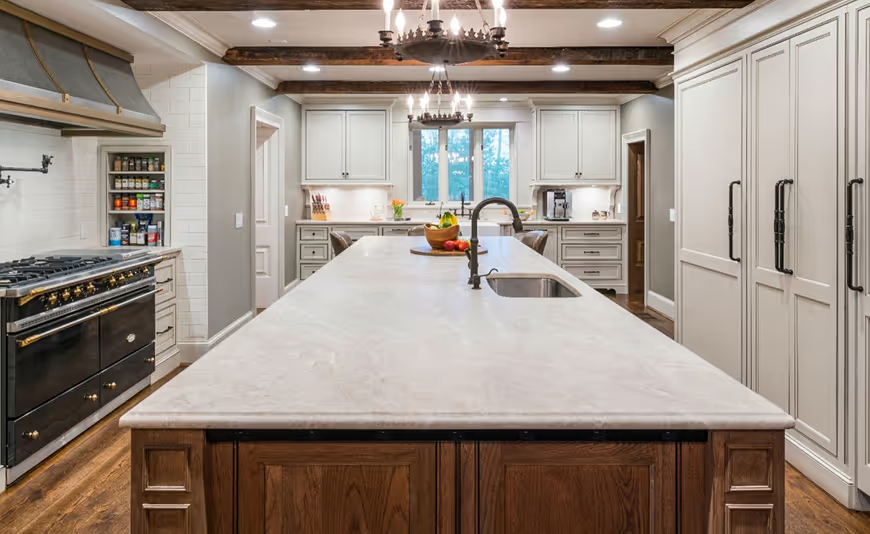
A slab backsplash — sometimes called a full-height backsplash — uses the same stone or engineered material as the countertop, extending it vertically up the wall between the countertop surface and the upper cabinets. Rather than individual tiles with grout lines, a slab backsplash is a continuous, uninterrupted surface that flows seamlessly from the countertop upward.
Slab backsplashes are most commonly executed in quartz, quartzite, marble, or granite — the same natural and engineered stones used for countertops. They can also extend to a full-height treatment behind the range, creating a dramatic statement wall that showcases the material in its most expansive and impressive form.
The effect is simultaneously modern and luxurious — a kitchen that feels thoroughly cohesive and effortlessly sophisticated. Our overview of the backsplash trends dominating 2026 covers how the slab backsplash fits within the broader tile and surface directions that are shaping kitchen design this year.
The Case for a Slab Backsplash
Seamless, grout-free beauty. The most compelling argument for a slab backsplash is aesthetic: the absence of grout lines creates a surface of uninterrupted material that feels genuinely luxurious. On a dramatic quartzite or marble slab, the veining moves continuously from countertop to backsplash without interruption — an effect that is genuinely stunning and impossible to achieve with tile.
Exceptionally easy to clean. Without grout lines to trap grease, food splatter, and moisture, a slab backsplash is one of the easiest kitchen surfaces to maintain. A quick wipe with a damp cloth restores it to pristine condition — no scrubbing grout, no resealing, no discoloration over time. For busy households where daily kitchen cleaning is a priority, this is a meaningful practical advantage.
Design cohesion. A slab backsplash that matches or closely complements the countertop material creates a level of design cohesion that is very difficult to achieve any other way. It makes the countertop and backsplash read as a single, unified design element rather than two separate decisions — and that unity gives the kitchen a polished, considered quality that buyers and guests notice immediately.
Strong resale appeal. In the Northern Virginia real estate market, a slab backsplash — particularly in a premium natural stone like quartzite or marble — is a feature that commands attention at resale. It signals quality and design intentionality in a way that even beautiful tile sometimes cannot.
For homeowners considering this direction, our guide on countertop fabrication and installation covers how slab backsplashes are fabricated and installed as part of an integrated countertop project — and why working with an experienced fabricator matters for achieving a seamless result.
The Limitations of a Slab Backsplash
Higher material cost. Using premium stone for a full backsplash requires additional material from the same slab — or a coordinating slab — which increases the overall stone cost relative to a tile backsplash. For homeowners already investing in a high-quality countertop material, the additional cost of extending it to the backsplash is often manageable. For those on a tighter budget, it can push the project beyond comfortable reach.
Less design flexibility. A slab backsplash is a commitment to one material and one visual statement. It doesn't offer the texture, pattern variety, and decorative complexity that tile backsplashes can achieve. If your design vision calls for handmade zellige, a bold geometric pattern, or a contrasting texture against a stone countertop, tile is the way to get there.
Repairs are more complex. If a slab backsplash chips or cracks, repairs are more difficult than replacing a single damaged tile. Matching stone from the same quarry lot is not always possible, and seamless repairs require skilled fabrication. While damage is relatively uncommon on a properly installed slab backsplash, it's a limitation worth acknowledging.
The Case for a Tile Backsplash
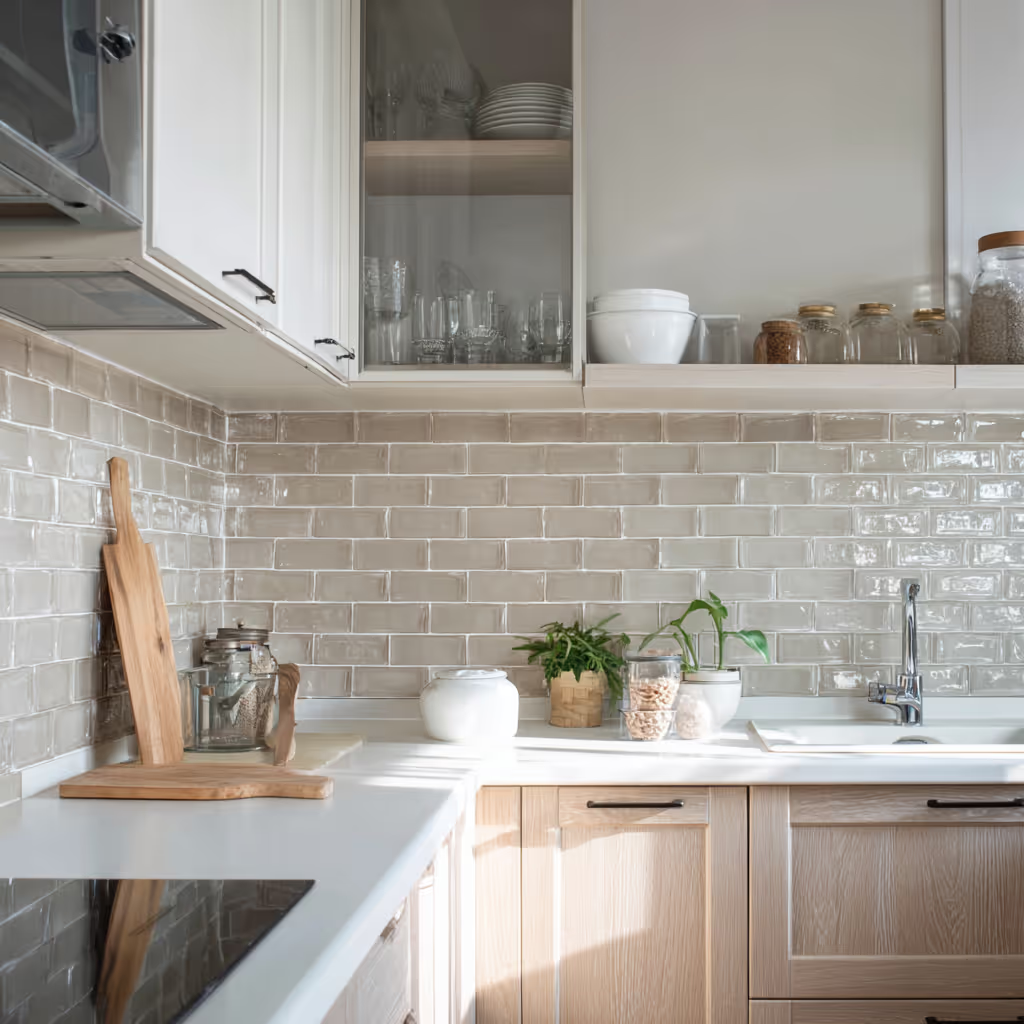
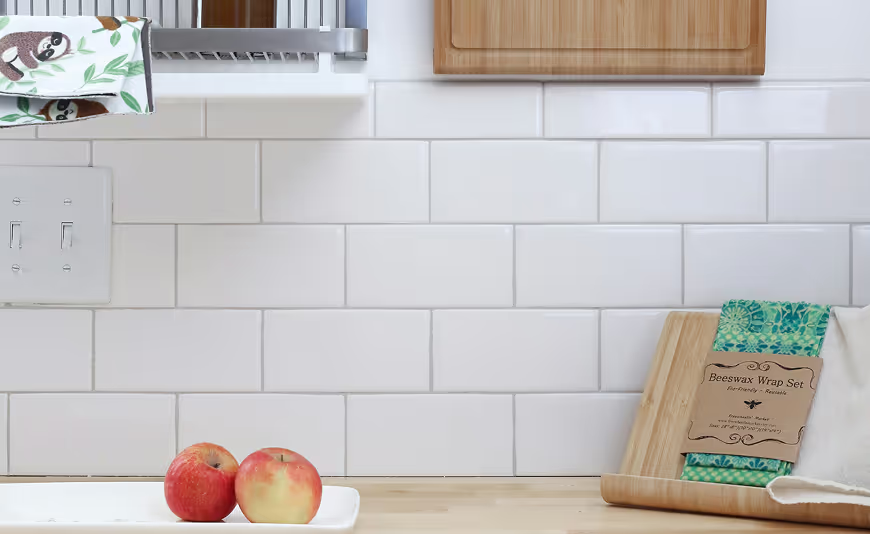
Infinite design possibilities. The tile backsplash category in 2026 is extraordinary in its breadth. Handmade zellige in dozens of colors. Fluted ceramic with three-dimensional texture. Classic subway tile in a range of sizes and profiles. Geometric cement tile in bold patterns. Porcelain panels in stone and concrete looks. The design possibilities available through tile are simply not matched by any slab material — and for homeowners who want their backsplash to be a true design statement, tile delivers options that slab cannot.
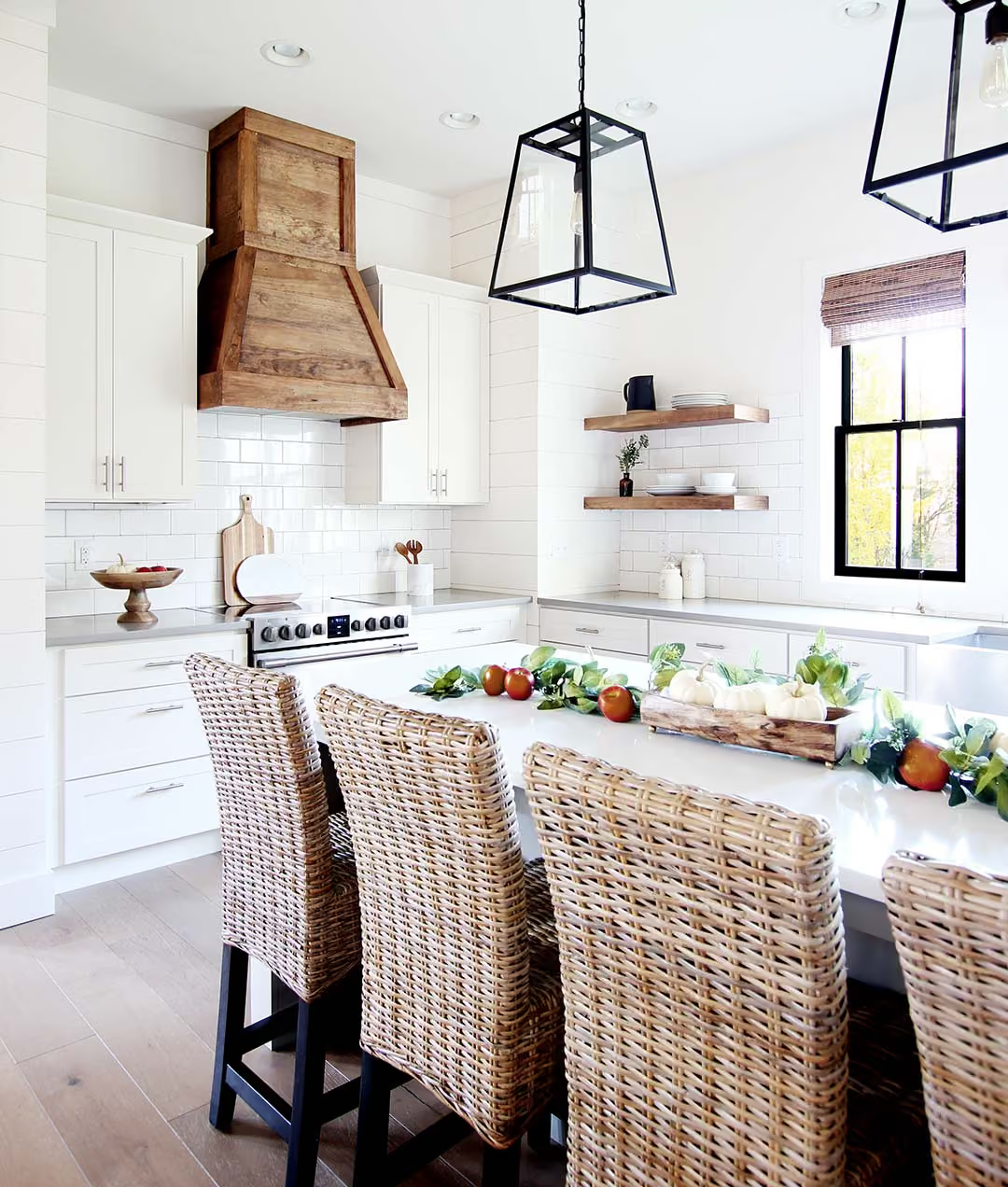
Cost flexibility. Tile backsplashes are available across an enormous price range — from $5 per square foot for basic ceramic subway tile to $40 or more per square foot for premium handmade zellige or natural stone mosaic. This flexibility makes it possible to invest heavily in the backsplash as a design moment or keep it modest to allocate budget elsewhere in the project. Our kitchen materials overview and backsplash and wall tile selection give a sense of the range of options available at Grace House Studio.
Easier repairs. A cracked or chipped tile can be replaced individually — a relatively straightforward repair, particularly if extra tiles were saved from the original installation. This repairability is a practical advantage in a high-use kitchen environment where backsplash damage, while uncommon, is more possible than with a countertop surface.
Texture and pattern as design tools. One of the most compelling design arguments for tile is the role that texture plays in a 2026 kitchen. A fluted tile backsplash behind the range, a zellige field tile on the full backsplash, or a handmade ceramic in a running bond pattern all bring a warmth, depth, and character to a kitchen that a slab surface — however beautiful — cannot fully replicate. Tile is tactile in a way that polished stone often is not, and in a design era that is moving decisively toward warmth and authenticity, that tactility matters.
What Does Each Option Cost in Northern Virginia?
Tile backsplash installed: In Northern Virginia in 2026, a tile backsplash installation typically runs between $25 and $65 per square foot installed — covering both materials and labor. The wide range reflects the significant price variation between tile types. A basic ceramic subway tile installation sits toward the lower end; premium handmade zellige or natural stone mosaic sits considerably higher. A typical kitchen backsplash covering 30 to 40 square feet will generally run between $800 and $2,500 in materials and $500 to $1,500 in labor.
Slab backsplash installed: A slab backsplash is typically priced as a linear foot of additional countertop material — the backsplash is fabricated from the same slab and installed as an extension of the countertop project. In Northern Virginia, a full-height slab backsplash in quartz or quartzite typically adds $50 to $150 per linear foot to the countertop project cost, depending on the material and the height of the backsplash. For a kitchen with 15 linear feet of backsplash area, that translates to an additional $750 to $2,250 on top of the countertop cost.
For context on overall countertop project costs in our region, our guide to countertop installation costs in Northern Virginia provides detailed pricing that helps put the backsplash cost in perspective.
How to Make the Right Choice
The tile vs. slab backsplash decision ultimately comes down to three questions:
What aesthetic outcome do you want?
What is your maintenance tolerance?
And how does the backsplash budget fit within your overall kitchen remodeling investment?
If you want seamless luxury, easy cleaning, and a unified material story from countertop to wall — and you're already investing in a premium stone countertop — a slab backsplash is a natural and compelling choice. If you want texture, pattern, visual personality, and the flexibility that only tile can offer — and your design vision calls for something more artisanal and layered — tile is the direction that will make you happiest.
Many of our most celebrated kitchen projects at Grace House Studio use a combination of both: a slab backsplash in most of the kitchen for cohesion and easy maintenance, with a decorative tile treatment in a focused zone — behind the range, or between open shelves — that brings personality and visual interest exactly where it matters most.
Our team would love to help you work through this decision as part of your broader kitchen design. Schedule a design consultation, explore our kitchen remodeling services, browse our countertop materials and backsplash tile options, or contact us today. The right backsplash is waiting — and we're here to help you find it.
%20%40dnicoledesignstudio.webp)