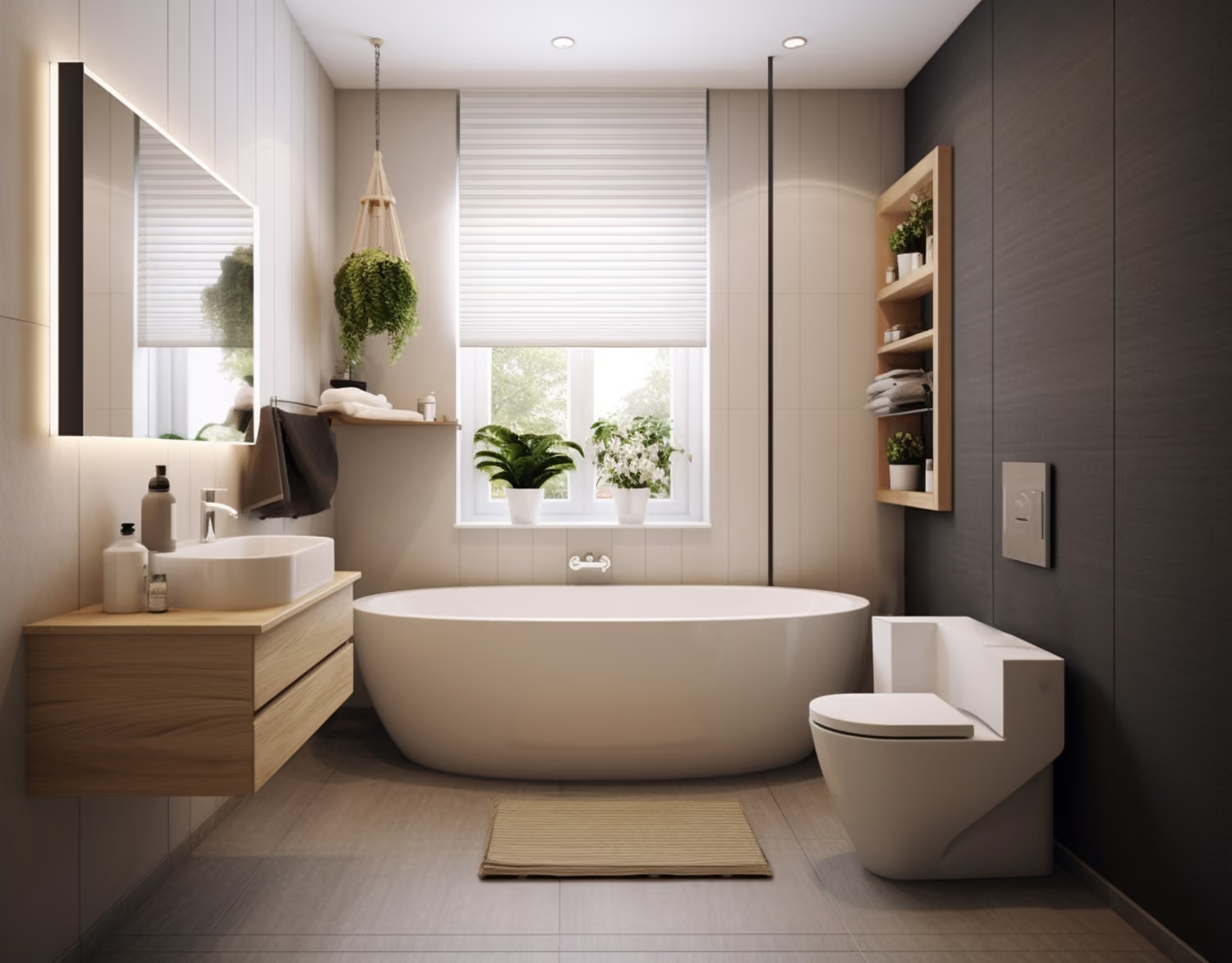
Small bathrooms are one of the most common remodeling challenges we encounter in the Culpeper area. Whether it's a compact primary bath in an older home, a tight hall bathroom shared by the whole family, or a powder room that functions as the first impression guests get of your home, small bathroom spaces require a different kind of design thinking than larger ones. The approach that works in a generous primary suite simply does not translate to a 5x8 bathroom with a single window and limited natural light.
The good news is that a small bathroom, approached correctly, can be one of the most satisfying remodels you can undertake. The constraints force precision and intentionality that larger spaces don't always demand, and the result, when done well, is a space that feels complete, considered, and considerably more generous than its square footage suggests.
At Grace House Studio, we work with homeowners across Culpeper and central Virginia on bathroom remodels of every size and scope. Here is our practical, design-grounded guide to maximizing a small bathroom in Culpeper without sacrificing an inch of style.
Start With the Right Layout
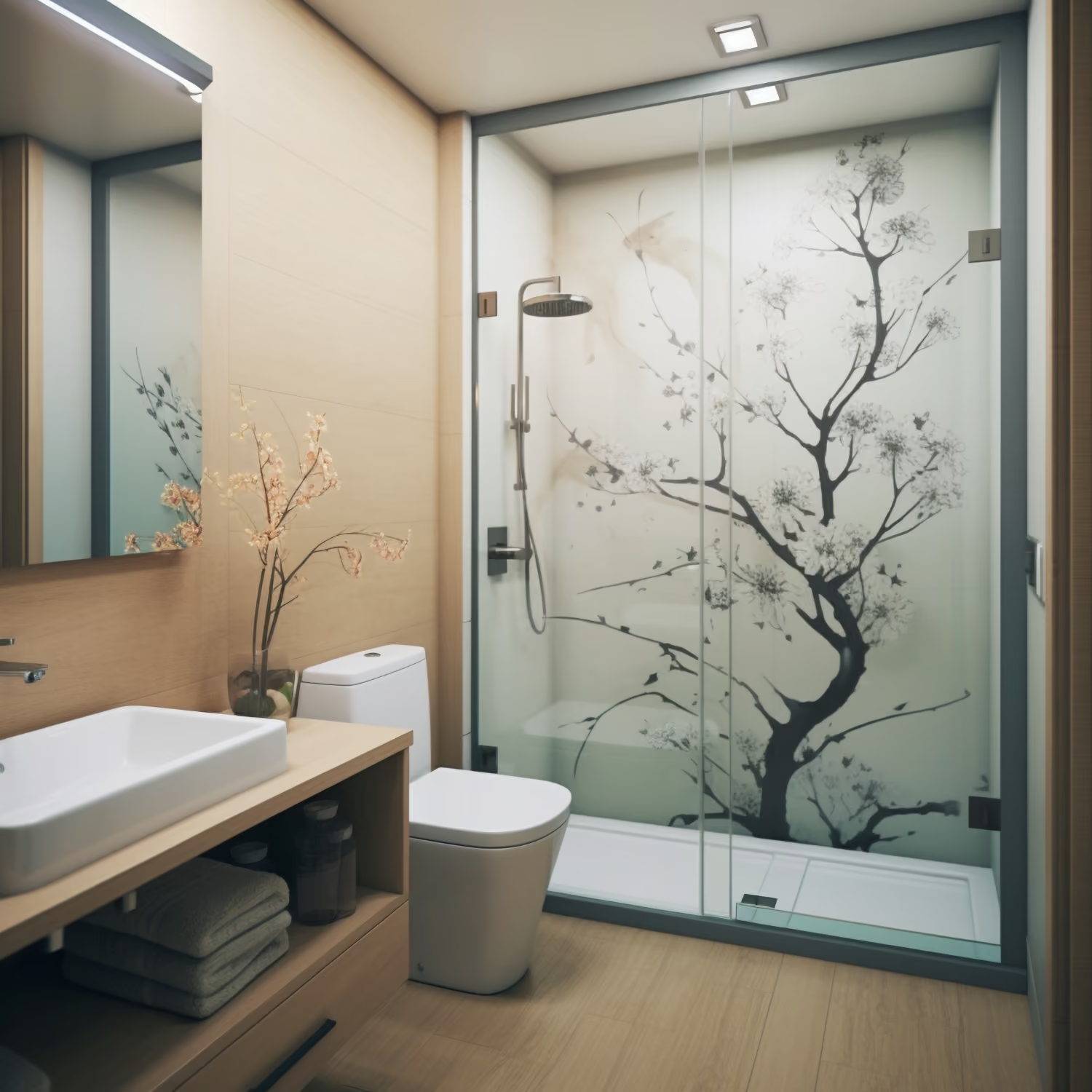
Before you think about tile colors or vanity styles, the most important question in a small bathroom remodel is whether the existing layout is working as hard as it possibly can. In many older Culpeper homes, bathrooms were laid out with convenience rather than optimization in mind, and a relatively modest reconfiguration can unlock significantly more usable space and better flow.
Common layout improvements in small bathrooms include swapping a swinging door for a pocket door or barn door, which reclaims the floor area that a swinging door eats into. Replacing a full tub-shower combo with a compact walk-in shower often frees up surprising amounts of visual and physical space. And relocating a vanity from a centered position on one wall to a corner or angled configuration can open up the middle of the room in a way that makes the bathroom feel immediately larger.
Not every layout change requires moving plumbing, and not every plumbing move is as expensive as homeowners fear. A conversation with an experienced remodeler early in the planning process can identify which changes are worth the investment and which ones are better avoided. Our guide on how to plan a kitchen remodel in Northern Virginia covers the planning framework that applies equally well to bathroom projects, including how to sequence decisions and manage budget across the full scope of work.
Choose a Vanity That Works for the Space
The vanity is the most spatially influential fixture in a small bathroom, and choosing the right one is one of the highest-leverage decisions in the entire remodel.
Floating vanities are one of the best choices for compact bathrooms. Wall-mounted and elevated off the floor, a floating vanity creates continuous floor visibility beneath it that makes the room feel larger. The uninterrupted sight line from wall to wall gives the eye more visual space to travel, which tricks the brain into perceiving the room as more generous than it is. In Culpeper homes with older bathrooms that have bulky, floor-mounted vanity cabinets, replacing them with a floating design is one of the single most impactful upgrades available.
Smaller footprint vanities, narrow profiles, and corner vanity configurations all help preserve floor space without sacrificing storage. What matters is choosing a vanity that fits the room's actual dimensions with room to breathe, rather than filling every available inch with cabinetry and leaving no space for the room to feel open.
Our comprehensive guide to bathroom vanities with sinks for Virginia homeowners covers the full range of vanity styles, configurations, and finish options available, and is a great resource for narrowing down your direction before the design process begins.
Use Tile to Create the Illusion of Space
Tile is the most powerful spatial tool available in a small bathroom, and the way you use it has an enormous effect on how big or small the room feels.
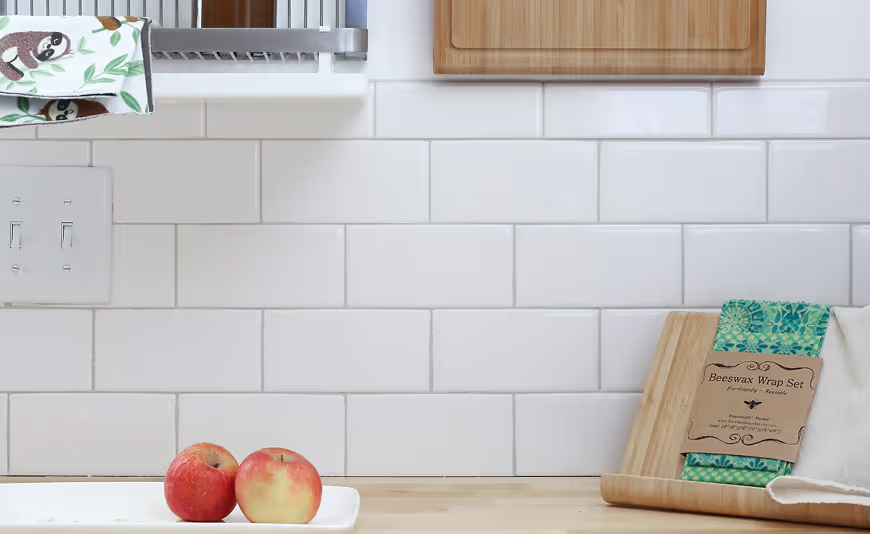
Large format tiles are one of the most effective choices for small bathroom floors. Fewer grout lines mean a calmer, more continuous surface that reads as more expansive than a floor broken up by many smaller tiles. A 12x24 or 24x24 tile on the floor of a small bathroom, particularly when laid in a horizontal staggered pattern, creates a horizontal visual pull that makes the room feel wider.
Carrying the same tile from the floor up the shower walls, without a border or transition, creates a seamless visual continuity that removes visual interruptions and makes the space feel taller and more cohesive. This is the same principle that drives the wet room aesthetic in larger primary bathrooms, scaled down for a smaller space.
Lighter tile colors reflect more light and contribute to a sense of openness. Warm whites, soft creams, and light stone looks all perform well in compact bathrooms with limited natural light. If you want to introduce a bolder tile direction, the best place to do it in a small bathroom is in a contained accent zone, like a niche, a feature wall behind the vanity, or the shower floor.
The bathroom tile trends of 2026 give a strong overview of the tile directions that are working particularly well in smaller bathroom environments right now, including large format options, warm neutrals, and the fluted textures that add depth without visual weight.
Rethink Storage
Storage is one of the most pressing concerns in a small bathroom, and solving it well is what separates a bathroom that functions beautifully from one that always feels cluttered and chaotic regardless of how nice the finishes are.
Recessed niches in shower walls are one of the most efficient storage solutions available in a small bathroom. Built into the wall rather than projecting into the space, a well-placed niche holds all of your shower products without adding any visual bulk to the room. A single niche, tiled to match the surrounding walls and properly proportioned to the shower, is both functional and genuinely attractive.
Medicine cabinets have made a strong design comeback in 2026, and for good reason. A well-chosen medicine cabinet above the vanity provides significant concealed storage without occupying any floor space at all. Modern medicine cabinets come in styles ranging from sleek and frameless to framed and architecturally detailed, and they can serve as a design feature rather than simply a utility fixture.
Vertical storage is one of the most underused strategies in small bathroom design. A tall, narrow linen cabinet positioned beside a vanity or in a dead-corner space provides significant storage in a minimal footprint. Open shelves above the toilet, properly styled and not overloaded, make productive use of wall space that would otherwise contribute nothing to the room.
Our guide to bathroom storage cabinets covers the storage configurations that work best in bathrooms of every size, including some clever solutions that work particularly well in the compact bathrooms common in Culpeper's older housing stock.
Maximize Light
Light is the most powerful tool for making a small bathroom feel larger, and maximizing it requires attention to both natural and artificial sources.
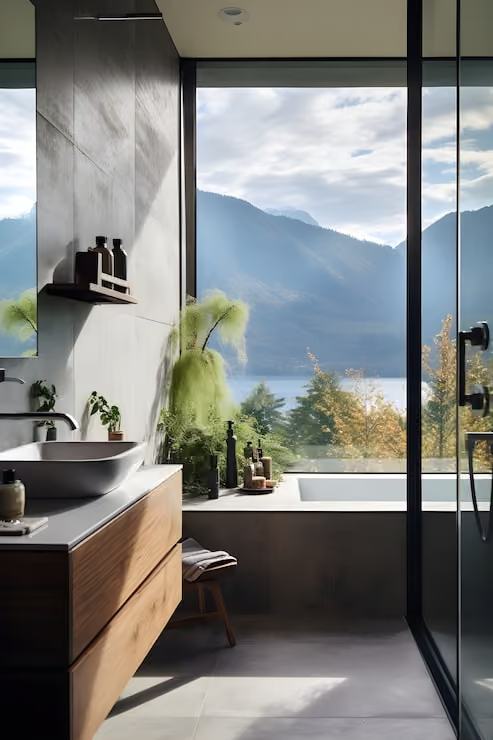
If your bathroom has a window, keep it unobstructed or use a treatment that allows maximum light transmission. Frosted film on the glass provides privacy without sacrificing light, and it is a far better choice than a heavy curtain or blind that blocks the window almost entirely.
For artificial lighting, the most important upgrade you can make in a small bathroom is moving away from a single overhead fixture. Overhead lighting in a bathroom creates shadows on the face and contributes to a flat, uninviting atmosphere. Replacing or supplementing it with sconces positioned at eye level on either side of the mirror provides even, flattering light that also makes the room feel more deliberately designed.
Warm-toned bulbs in the 2700K to 3000K range make a bathroom feel warmer and more inviting than cool white or daylight bulbs, and they complement the warm tile and vanity directions that are most popular in Culpeper area remodels right now.
For homeowners interested in the technology side of bathroom upgrades, our overview of smart bathroom tech worth considering for your next remodel covers lighted mirrors, programmable lighting systems, and other tech integrations that work particularly well in small spaces where every element needs to earn its place.
Style Without Sacrifice
The most common mistake in small bathroom design is playing it too safe. Homeowners assume that a small bathroom needs to be neutral and minimal to feel spacious, and they end up with a room that is inoffensive but completely lacking in personality.
The reality is that a small bathroom is one of the best places in your home to commit to a bold design direction. The limited square footage means the investment in a premium tile, a distinctive vanity color, or a statement mirror is more affordable than in a larger space. And because the room is small, a single strong design choice becomes a feature rather than an afterthought.
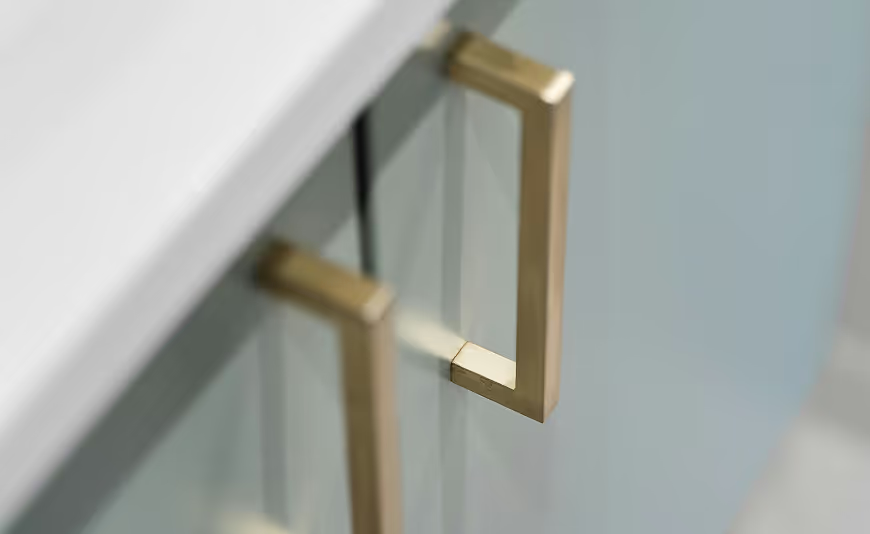
A deep green floating vanity with unlacquered brass hardware. A checkerboard floor in warm cream and terracotta. A zellige tile feature wall behind the vanity mirror. Any one of these choices can transform a small bathroom from a forgettable utility space into a room that people remember and genuinely admire.
The bathroom tile trends of 2026 and our guide to vanity styles Northern Virginia homeowners are requesting most both give strong direction on the design choices that are resonating most strongly right now and that translate beautifully into smaller bathroom environments.
What Does a Small Bathroom Remodel Cost in Culpeper?
For a compact bathroom remodel in the Culpeper area, homeowners should generally budget between $12,000 and $30,000 for a full renovation that includes new tile, a new vanity, updated fixtures, and quality installation throughout. A focused cosmetic update, without changing the layout or plumbing configuration, can be accomplished for $7,000 to $15,000 depending on material choices.
The most important factor in getting good value from a small bathroom remodel in Culpeper is choosing a remodeling partner with genuine design capability, not just construction capacity. A well-designed small bathroom delivers far more per square foot than a poorly designed one, and the design decisions made early in the process determine the quality of the outcome far more than the construction work that follows.
Our broader guide to bathroom remodeling costs in Northern Virginia in 2026 gives detailed cost context that applies directly to the Culpeper market and is worth reading before you begin gathering quotes.
Remodel Your Culpeper Bathroom With Grace House Studio
Grace House Studio serves homeowners throughout the Culpeper area and across central Virginia with full-service bathroom remodeling, from initial design consultation through tile selection, vanity sourcing, and complete installation. We bring the same design expertise and material quality to every Culpeper project that we deliver across Northern Virginia.
Explore our bathroom remodeling services, browse our bathroom materials including tile, vanities, and hardware, or contact us today to schedule a design consultation. Your small bathroom has more potential than you think, and we would love to help you unlock it.
.jpeg)
%20%40dnicoledesignstudio.webp)