
Choosing the right countertop material is one of the most important decisions in any kitchen remodel. Your countertops impact not only your kitchen's appearance but also its functionality, maintenance requirements, and long-term value. For Virginia homeowners planning kitchen renovations, understanding the differences between butcher block, quartz, and granite countertops is essential to making the best choice for your home.
In this comparison guide, we'll explore how these three materials stack up across durability, maintenance, and aesthetics to help you make the best choice for your Virginia kitchen.
Quick Comparison Overview
Granite Countertops: Natural stone offering unique patterns, excellent durability, heat resistance, and timeless appeal. Requires periodic sealing but delivers long-lasting beauty and strong resale value.
Quartz Countertops: Engineered stone combining natural quartz with resins for a non-porous, low-maintenance surface. Available in consistent patterns with exceptional durability and stain resistance.
Butcher Block Countertops: Natural wood surfaces providing warmth and organic beauty. Functional as cutting surfaces but require regular maintenance and are more susceptible to water damage and scratches.
Durability: How They Hold Up Over Time
Granite Durability
Granite is one of nature's hardest materials, rating 6-7 on the Mohs hardness scale. It resists scratches exceptionally well and offers outstanding heat resistance, allowing you to place hot pots directly on the surface. Properly maintained granite countertops can last 50+ years or even a lifetime.
Strengths: Extreme hardness, heat-proof, chip-resistant with proper edges, lifetime durability
Limitations: Can chip if heavy objects strike edges or corners
Quartz Durability
Quartz combines 90-95% natural quartz crystals with polymer resins, creating material that's even harder than granite at 7 on the Mohs scale. It's completely non-porous, making it exceptionally hygienic and virtually maintenance-free. Quartz easily lasts 25-30+ years with minimal care.
Strengths: Hardest option, non-porous and stain-proof, more chip-resistant than natural stone, bacteria-resistant
Limitations: Moderate heat sensitivity (always use trivets for very hot pots)
Butcher Block Durability
Butcher block is significantly softer than stone, showing knife marks, dents, and scratches much more readily. Its biggest vulnerability is moisture—standing water or inadequate sealing can cause swelling, warping, and mold. With diligent maintenance, butcher block can last 20-30 years.
Strengths: Can be sanded and refinished to remove damage, natural antimicrobial properties in certain woods
Limitations: Shows wear easily, highly water-sensitive, requires constant vigilance, heat-sensitive
Winner: Quartz and granite both significantly outperform butcher block in durability, with quartz edging ahead for scratch resistance and granite excelling in heat resistance.
Maintenance Requirements: Daily Care and Long-Term Upkeep
Granite Maintenance
- Daily Care: Wipe with mild soap and water
- Sealing: Every 1-2 years (simple 30-minute DIY process)
- Long-Term: Minimal maintenance beyond periodic sealing
Quartz Maintenance
- Daily Care: Clean with soap and water or standard cleaners
- Sealing: Never needs sealing
- Long-Term: No special maintenance required—just regular cleaning
Butcher Block Maintenance
- Daily Care: Immediate spill cleanup, especially water; clean with minimal moisture and dry thoroughly
- Regular Oiling: Monthly initially, then every 2-3 months (30-60 minutes per application)
- Long-Term: Sanding and refinishing every few years for damage repair; sealed versions need complete refinishing every 3-5 years
- Ongoing Vigilance: Constant attention to water exposure, especially near sinks
Winner: Quartz requires only basic cleaning with no sealing. Granite needs simple periodic sealing. Butcher block demands significantly more time, attention, and effort.
Aesthetic Appeal and Design Versatility
Granite
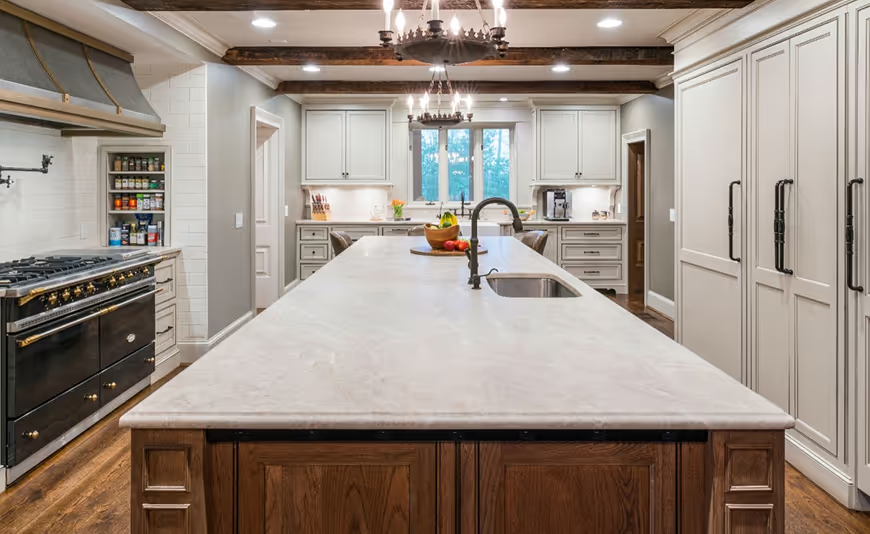
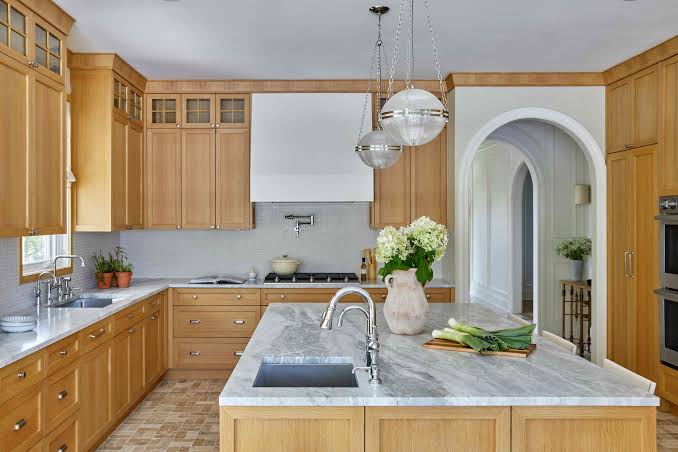
Granite offers unparalleled natural beauty with each slab being unique. Available in virtually every color from pure white to dramatic blacks, blues, greens, and reds, granite patterns range from subtle to dramatic movement with swirling veins and complex layering. The natural stone has inherent depth that catches light differently throughout the day, working beautifully in traditional, transitional, and contemporary kitchens.
Quartz
Quartz offers design consistency with hundreds of colors and patterns available. High-end quartz now convincingly replicates Carrara marble, Calacatta, and other luxury stones at lower cost with better performance. It excels in contemporary kitchens with clean, consistent appearance and availability in pure whites, grays, and solid colors.
Butcher Block
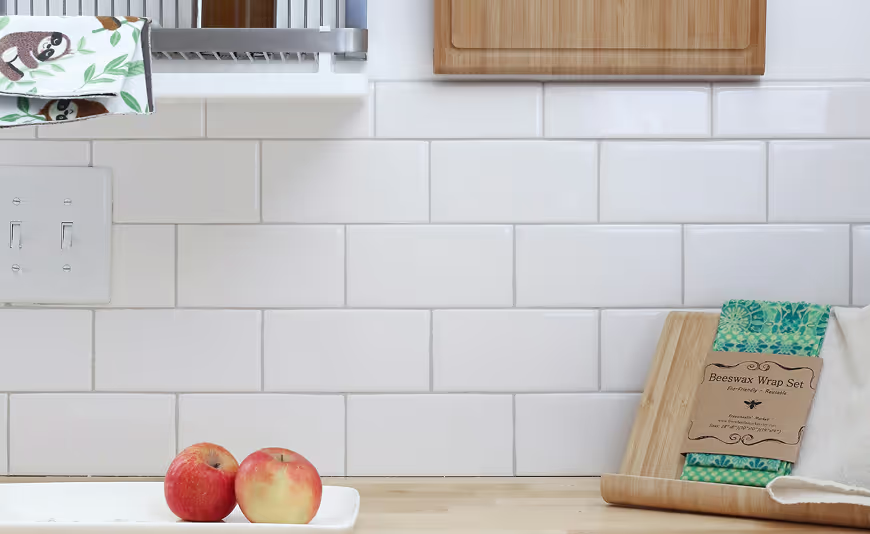
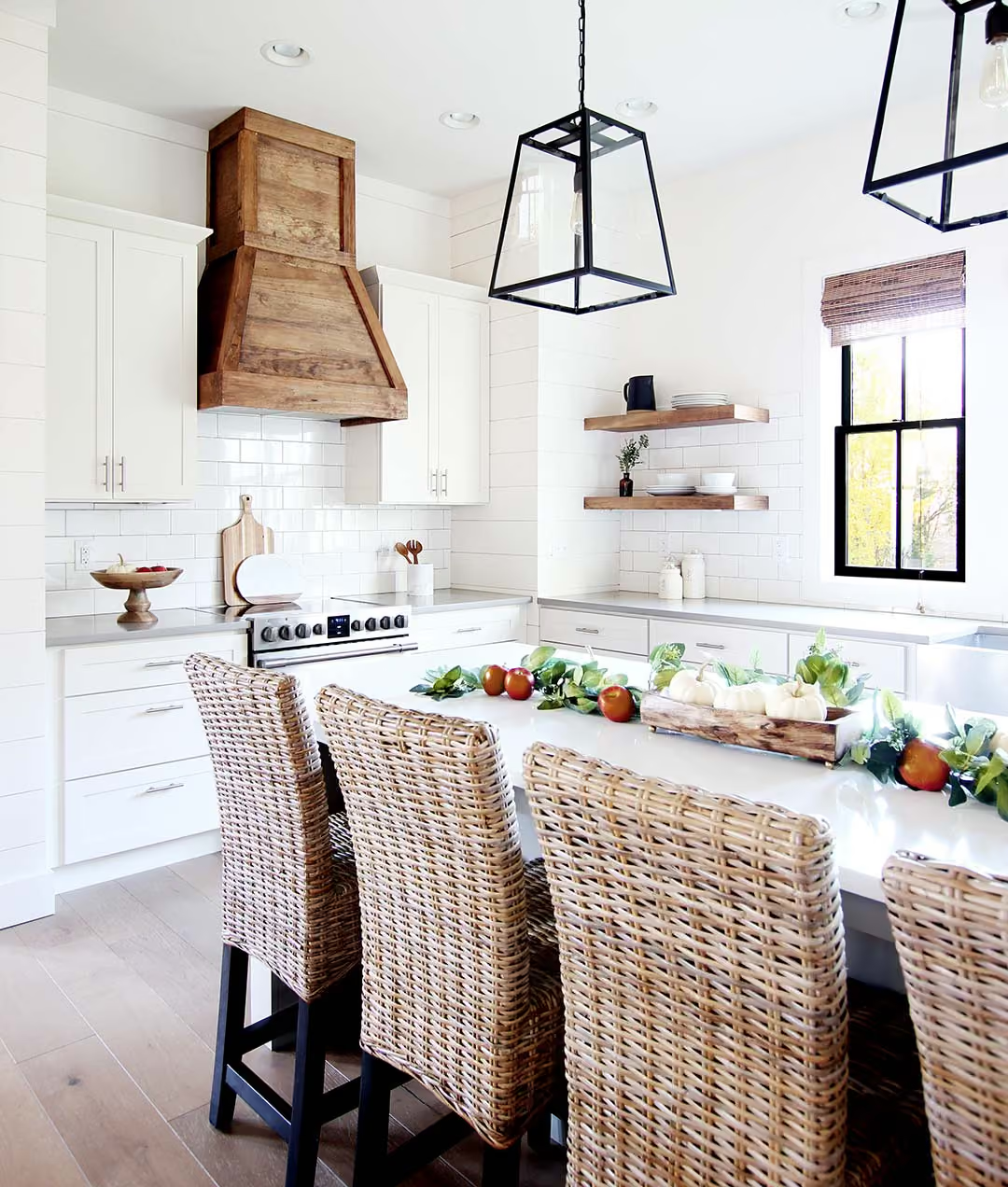
Butcher block provides distinctive warmth and organic character that stone cannot replicate. Different wood species offer colors from light maple to rich walnut. It develops patina over time as scratches and wear create character. Butcher block excels in farmhouse, cottage, and rustic styles but has more limited design application compared to stone's versatility.
Winner: Granite offers the widest range of colors, patterns, and style compatibility. Quartz excels for modern aesthetics and consistency. For most kitchen styles and design goals, granite and quartz offer superior aesthetic versatility.
Heat, Stain, and Water Resistance
Heat Resistance
- Granite: Exceptional—place hot pots directly on surface
- Quartz: Good but requires trivets for extremely hot items (above 300°F)
- Butcher Block: Poor—always requires trivets
Stain Resistance
- Granite: Excellent when properly sealed
- Quartz: Outstanding—virtually stain-proof and non-porous
- Butcher Block: Poor—susceptible to staining from wine, coffee, turmeric, etc.
Water Resistance
- Granite: Excellent when sealed
- Quartz: Perfect—completely non-porous
- Butcher Block: Poor—highly vulnerable to water damage
Winner: Quartz leads in stain and water resistance. Granite excels in heat resistance. Butcher block requires the most precautions across all categories.
Best Applications for Each Material
Granite: Ideal For
- Complete kitchen counters (perimeter and islands)
- Areas near cooktops (superior heat resistance)
- High-traffic family kitchens
- Outdoor kitchens
Quartz: Ideal For
- Modern kitchens
- Around sinks (non-porous surface)
- Minimal maintenance lifestyles
- Families with children
Butcher Block: Best For
- Kitchen islands (away from sinks)
- Baking stations
- Breakfast bars and eating areas
- Accent sections in stone kitchens
Resale Value and Return on Investment in Virginia
Granite: Typically recoups 70-80% of costs at resale in Virginia's competitive real estate market. Recognized as a premium feature that signals quality and helps properties sell faster across Northern Virginia, Charlottesville and Culpeper area and beyond.
Quartz: Recoups 70-75% of costs. Increasingly expected in Virginia's higher-end markets, particularly appealing to modern buyers in areas like Fairfax County, Loudoun County, and Arlington.
Butcher Block: Typically recoups 50-60% of costs. While some buyers love it, others view it as high-maintenance or worry about condition.
Winner: Granite and quartz deliver superior ROI and broader buyer appeal in Virginia's real estate market compared to butcher block.
Why We Recommend Granite, Quartz, or Marble
After comparing these materials across every important factor, we consistently recommend granite, quartz, or marble countertops to our clients over butcher block for most kitchen applications. Here's why:
Superior Long-Term Performance
Granite and quartz dramatically outperform butcher block in durability, stain resistance, moisture tolerance, and heat resistance. These advantages translate to countertops that maintain their beauty with minimal worry about damage.
Significantly Lower Maintenance
Granite needs simple sealing every 1-2 years. Quartz needs only regular cleaning. Butcher block demands monthly oiling, constant water vigilance, and periodic refinishing. For busy homeowners, the time and mental energy saved with stone materials is invaluable.
Better Long-Term Value
While butcher block costs less initially, granite and quartz deliver superior value through durability, longevity, and minimal maintenance costs. Over 20-30 years, stone materials often prove more economical.
Broader Design Versatility
Granite and quartz work beautifully across virtually any kitchen style. Butcher block's aesthetic works best in specific design styles, limiting flexibility if tastes change or when selling your home.
Practical Kitchen Reality
Real-world kitchen use involves water splashes, hot pots, dropped items, and spilled wine. Granite and quartz handle this reality effortlessly. Butcher block requires constant awareness and immediate response to prevent damage.
When Butcher Block Makes Sense
We use butcher block in specific strategic applications: as an accent feature on islands away from sinks, in dedicated baking areas, or as breakfast bar surfaces. These limited applications provide warmth and character without the challenges of full-kitchen installation.
Making Your Final Decision
Choose Granite if you want: Natural stone beauty with unique patterns, excellent heat resistance, strong durability with manageable maintenance, timeless appeal, and best value balance.
Choose Quartz if you want: The lowest maintenance option, consistent patterns, maximum stain and scratch resistance, modern aesthetics, and willingness to invest slightly more upfront for lifetime convenience.
Choose Butcher Block only if: You're using it strategically in limited applications, you genuinely enjoy regular maintenance routines, you prioritize warmth above practical concerns, or you're creating specific design styles where wood is essential.
For the majority of kitchen remodeling projects, granite and quartz offer the best combination of beauty, performance, and practicality.
Expert Kitchen Remodeling Guidance in Virginia
Our team has extensive experience designing and installing granite, quartz and marble countertops throughout Virginia. We provide honest guidance on which materials will serve you best based on your specific needs, lifestyle, and local climate considerations.
Ready to discuss countertop options for your Virginia kitchen remodel? Contact us today for a complimentary consultation. We'll assess your space, understand your priorities, and provide expert recommendations on the best countertop materials for your project. Serving Northern Virginia, Charlottesville, Culpeper area and surrounding areas, we'll help you create a kitchen that combines stunning design with practical performance for years to come.
%20%40dnicoledesignstudio.webp)