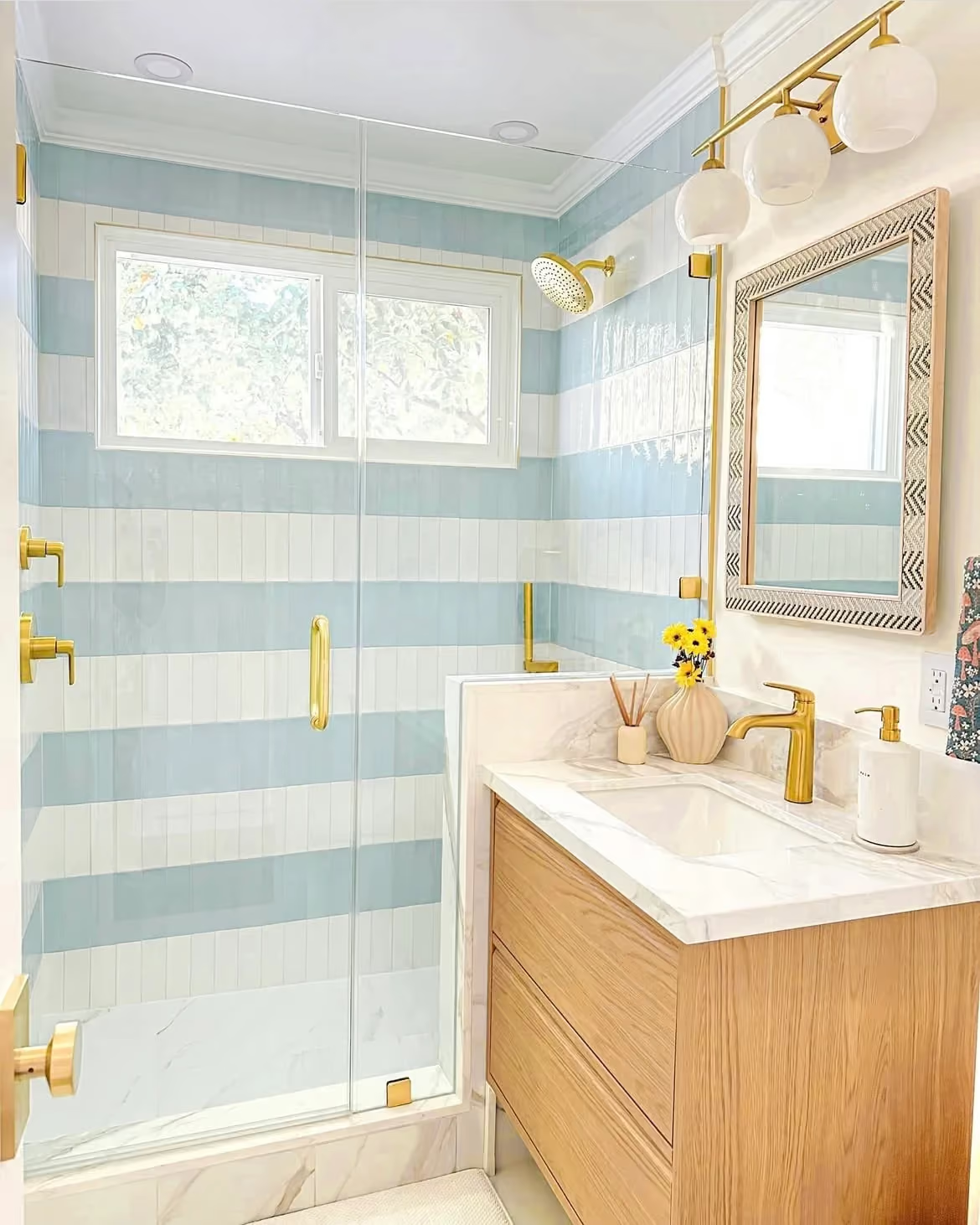
A kids' bathroom faces a different kind of daily stress test than any other room in the house: splashing, dropped toothbrushes, bath toys, and the occasional flooded sink. Designing around that reality, rather than around a showroom photo, is what makes a kids' bathroom remodel actually hold up.
Choose Materials That Forgive Daily Chaos
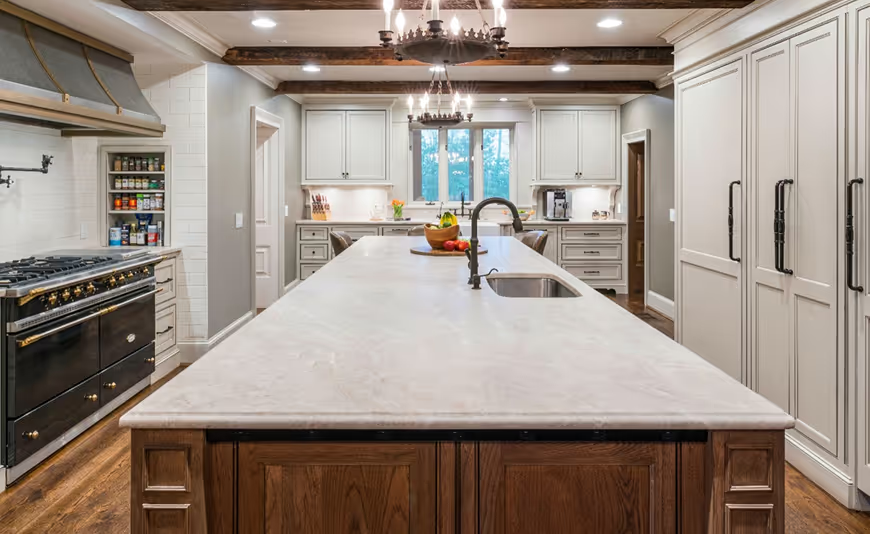
Quartz countertops are the clear choice for a kids' bathroom vanity. Quartz requires no sealing and resists staining from toothpaste, art supplies, and the general mess that comes with young children using a bathroom daily.
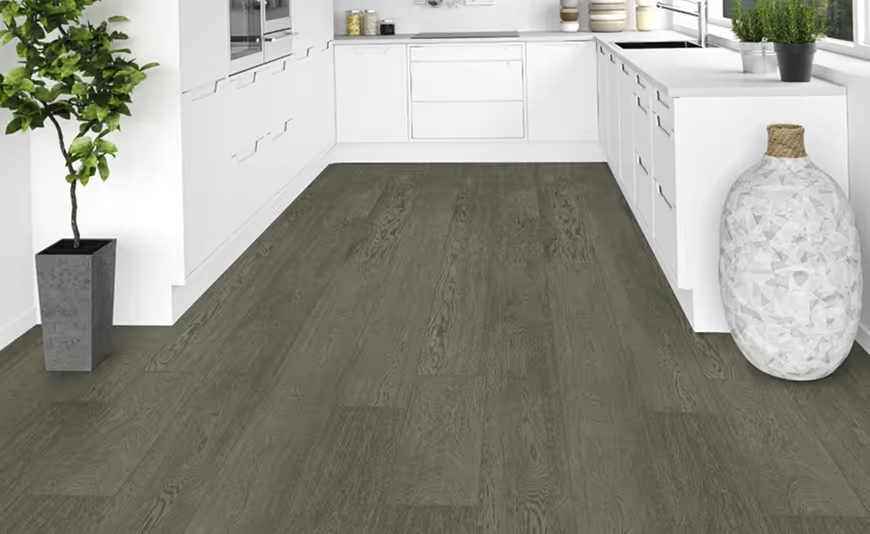
Porcelain tile flooring handles water splashing far better than carpet or unsealed materials, and it is significantly easier to clean after the inevitable bath-time overflow. Choose tile with a textured surface for slip resistance, since wet kids on a wet floor is a genuine safety consideration.
Durable cabinet construction matters more here than in almost any other bathroom. Plywood-core cabinetry with quality hinges holds up to enthusiastic opening, closing, and the occasional kicked cabinet door far better than particleboard construction.
Design for Independence as Kids Grow
Lower, accessible storage. A pull-out drawer or lower shelf within a child's reach for their own toothbrush, cup, and bath supplies encourages independence and reduces the daily back-and-forth of reaching items for them.
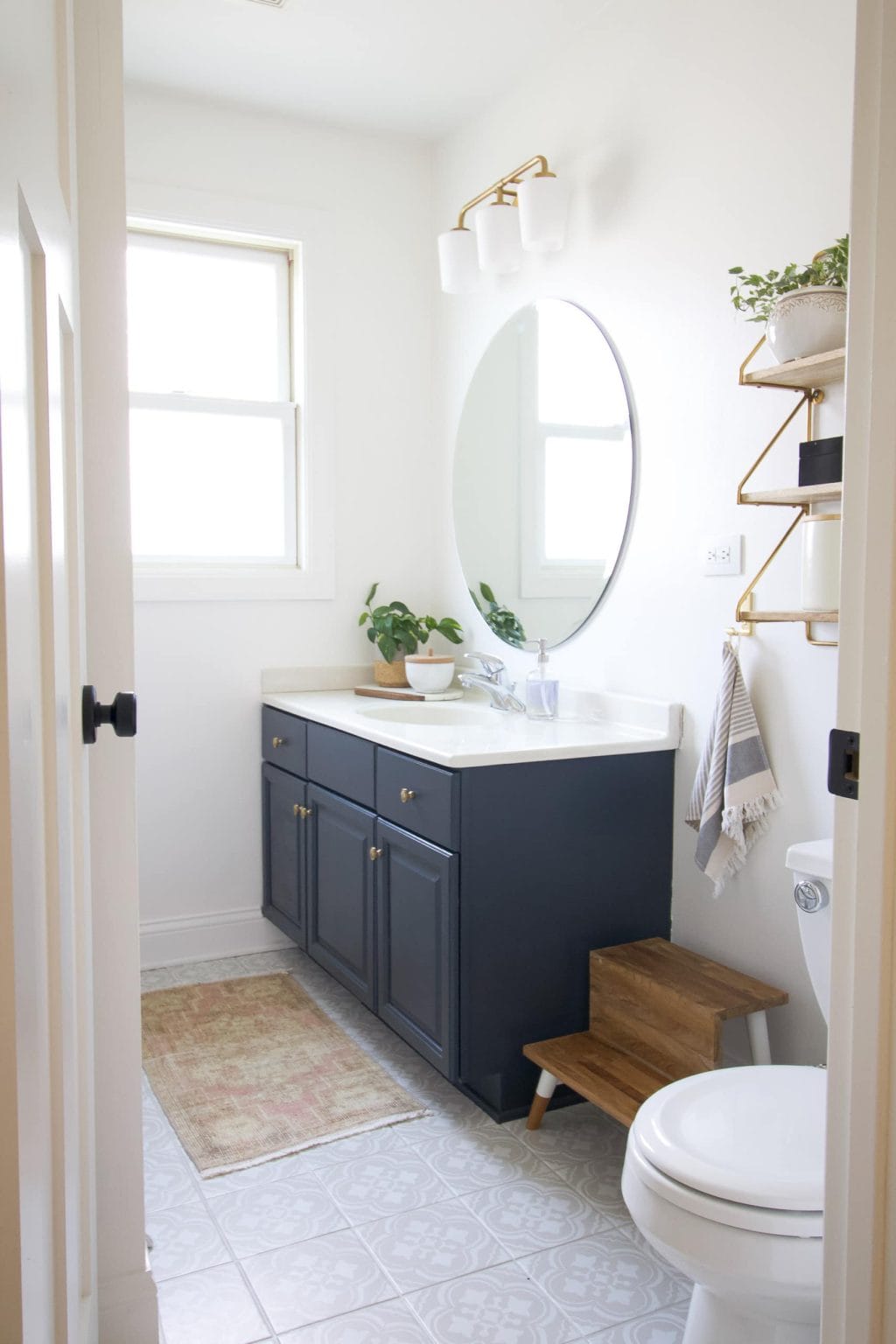
A step stool built into the design, or planned for. If your vanity height is standard adult height, planning physical space for a step stool, or considering a slightly lower vanity section, makes daily use easier for younger children without requiring you to compromise the whole room's design.
Easy-to-operate fixtures. Lever-style faucet handles are easier for small hands to operate than traditional knobs, an important practical consideration that does not have to sacrifice style.
Fun Without Sacrificing Longevity
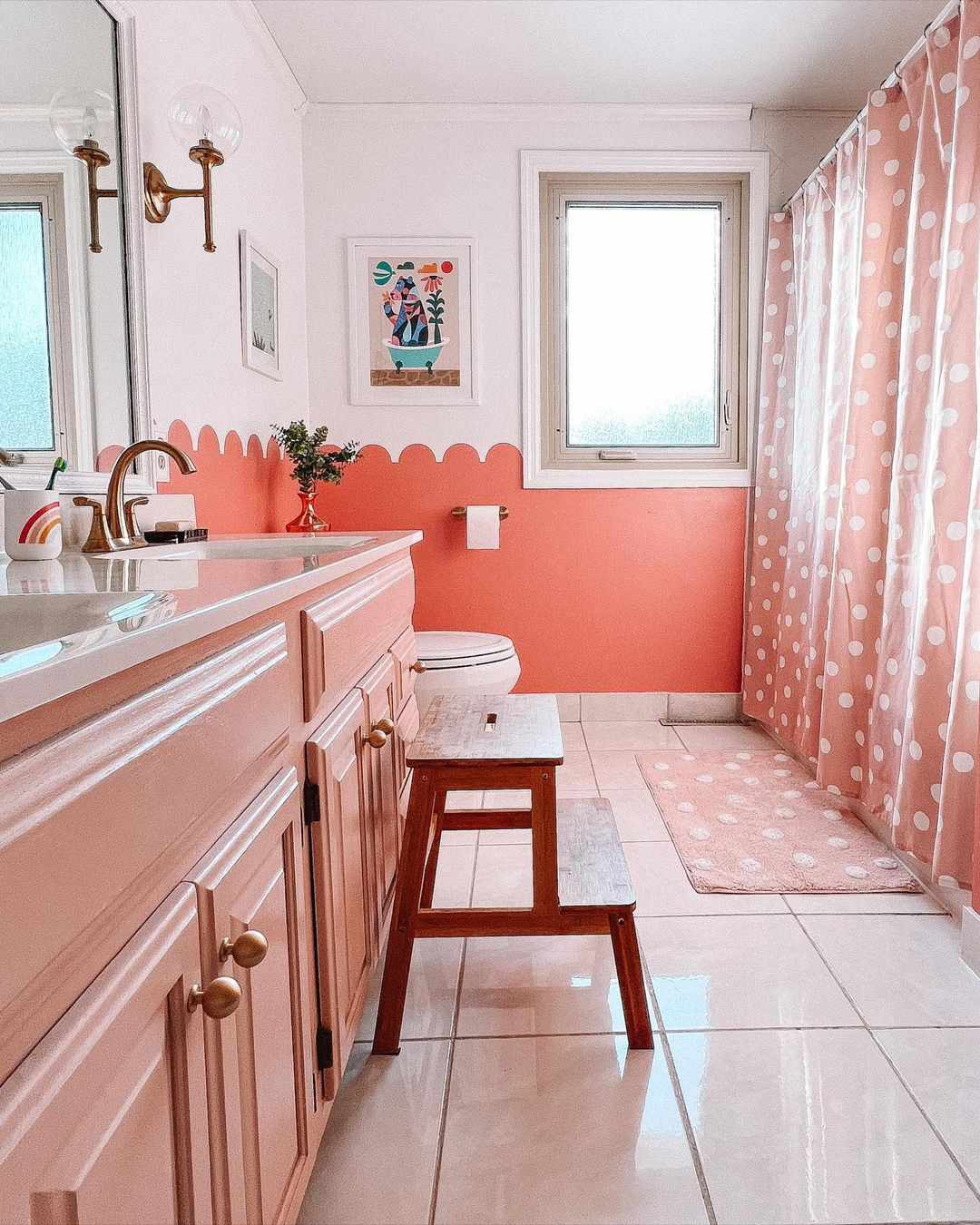
Choose a timeless base, add personality through accessories. Rather than committing to a highly themed permanent material choice that a child will outgrow in a few years, use a neutral, durable foundation for tile, cabinetry, and countertops, then introduce color and character through easily swappable elements like towels, a shower curtain, or wall art.
A durable, washable paint finish. A semi-gloss or satin paint finish, rather than flat, withstands cleaning and the occasional crayon incident far better while still looking fresh.
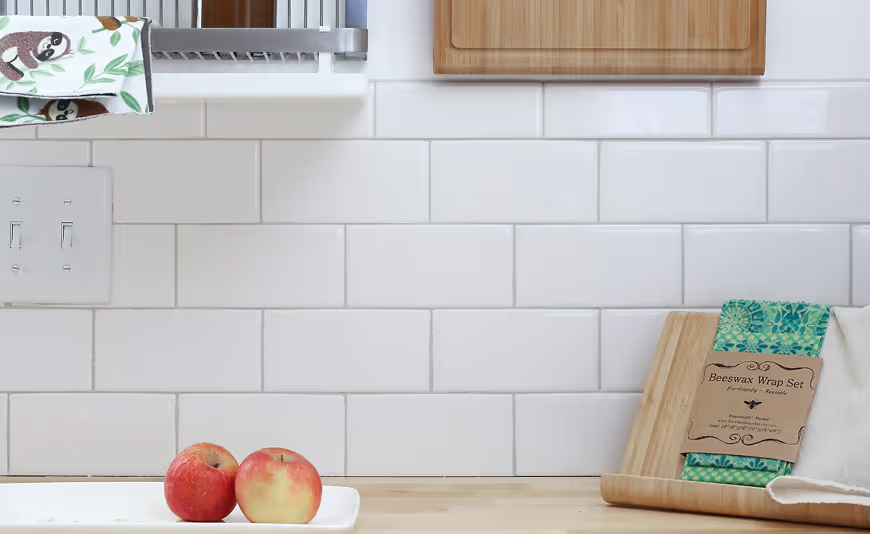
Patterned tile that hides minor wear. A tile with some pattern or variation shows scuffs and water spots less obviously than a stark solid white surface, which can be a practical advantage in a high-use kids' bathroom.
Safety Considerations Worth Building In
Anti-scald valves on the shower or tub prevent sudden temperature spikes, an important safety feature in any bathroom used by children. Rounded vanity edges reduce injury risk compared to sharp countertop corners. A slip-resistant tub or shower base matters as much as floor tile selection, particularly for younger children still being supervised during bath time.
Get a Plan Built for Your Family
The right balance of durability, safety, and style depends on your children's ages and how your household actually uses the space. Our team can design a kids' bathroom that holds up during a free in-home consultation.
Request Your Free In-Home Consultation
.jpeg)
%20%40dnicoledesignstudio.webp)