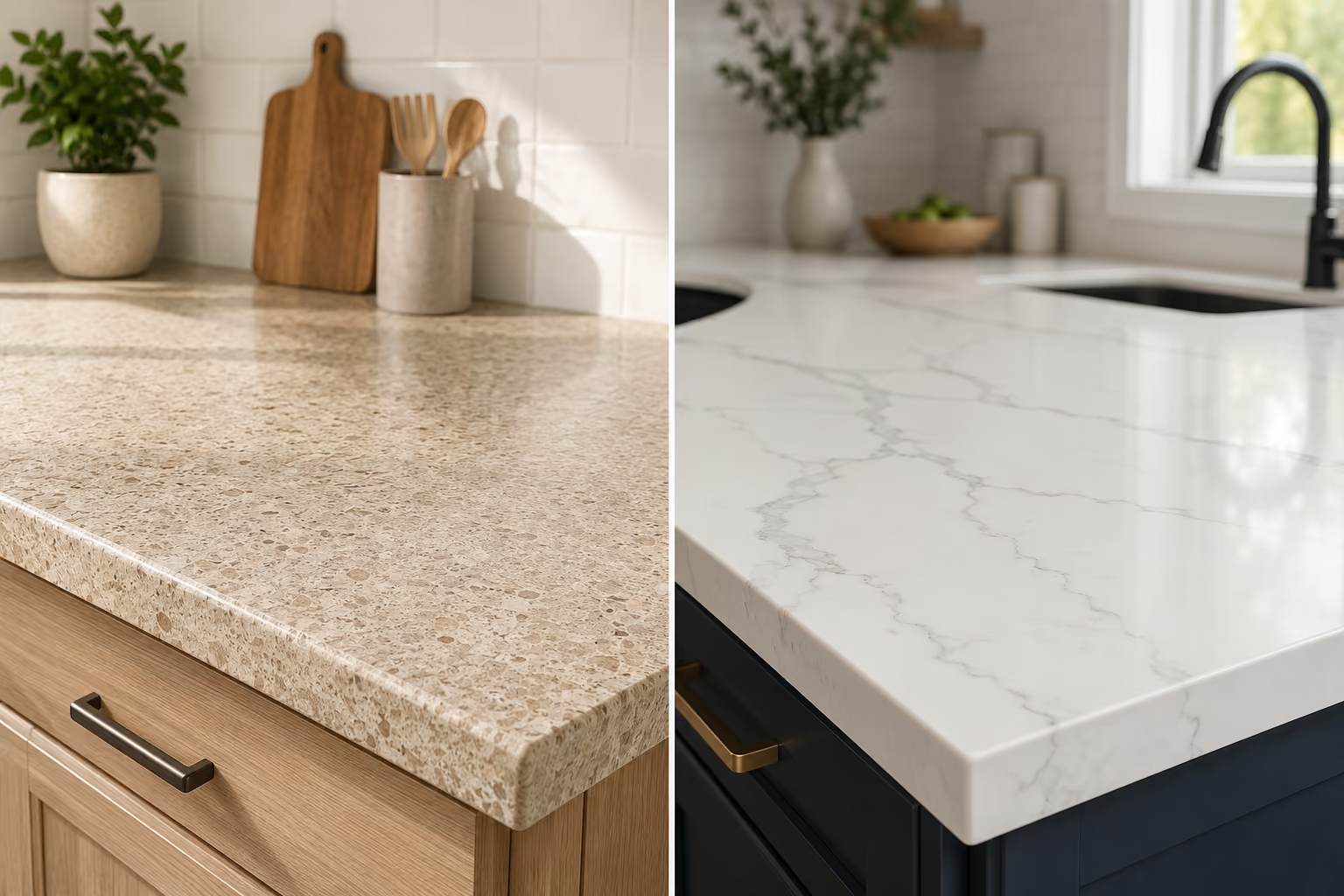
For most kitchens, yes, quartz is worth the upgrade over laminate. It lasts far longer, resists damage laminate can't, and adds real value to your home. The catch is cost, since quartz runs several times more than laminate upfront. Here's the real math and the tradeoffs, so you can decide what makes sense for your kitchen and your budget.
What Laminate and Quartz Actually Are
Laminate countertops are made from layers of paper and resin fused to a particleboard or plywood base, then topped with a thin decorative layer, usually about 1.5 millimeters thick. It's the same basic material as brands like Formica, and it's been a standard kitchen choice for decades because it's affordable and comes in almost any color or pattern.
Quartz is engineered stone. Manufacturers combine crushed natural quartz with resin, then compress it into slabs that are typically 2 or 3 centimeters thick. Because it's mostly real stone, it's far more durable than a laminate surface, but it costs more to produce and install.
Cost Comparison
This is where the decision gets real for most homeowners.
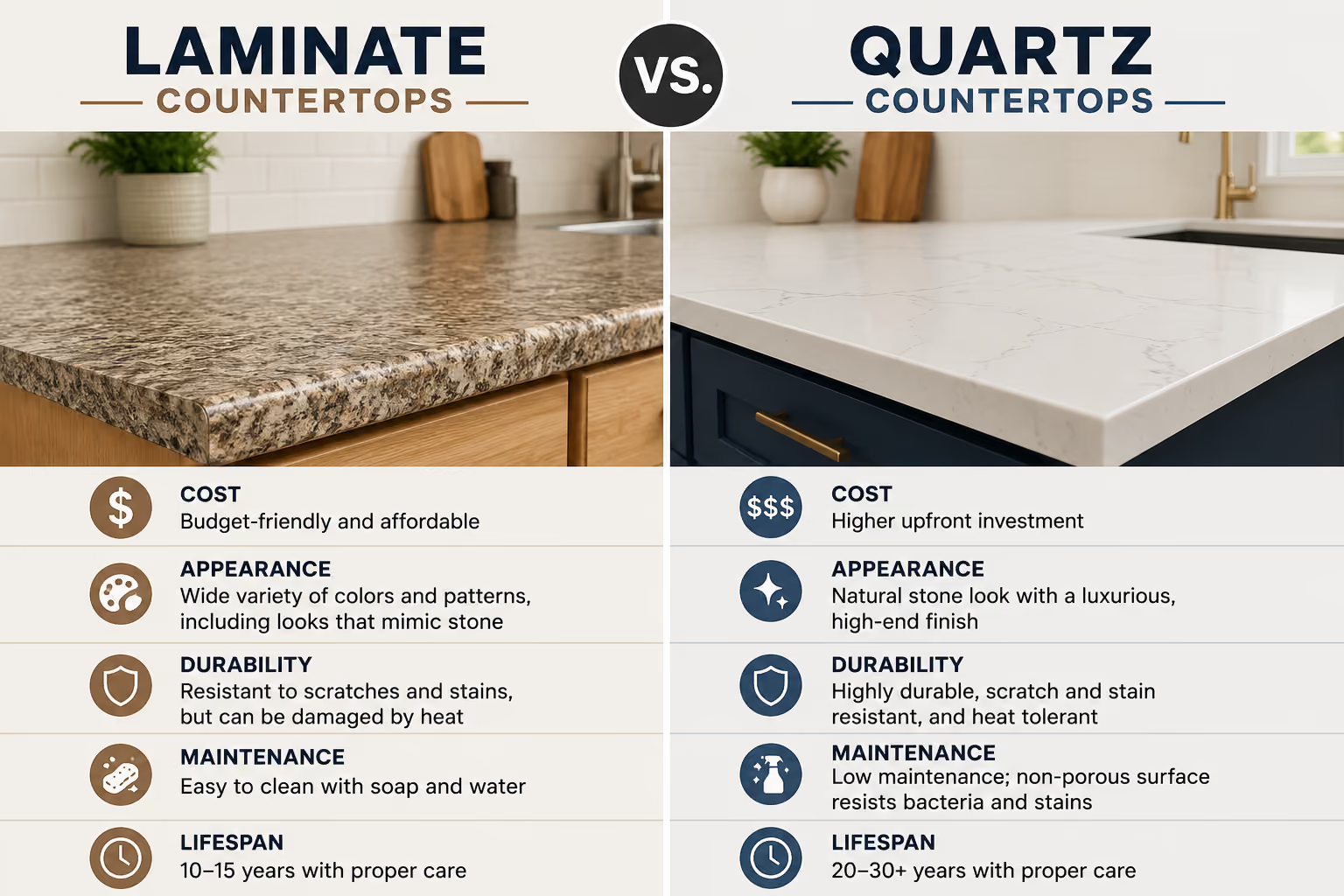
- Laminate: roughly $20 to $45 per square foot installed
- Quartz: roughly $55 to $100+ per square foot installed
For an average kitchen with 40 square feet of countertop, that's a difference of roughly $1,400 to $2,600 upfront. It's a real gap, and for a tight budget, laminate is still a reasonable choice. But the gap looks smaller once you factor in how long each material actually lasts.
Lifespan: The Number That Changes the Math
Laminate typically lasts 10 to 15 years before it starts showing chips, lifting seams, or a worn finish. Quartz is built to last 25 years or more, and many manufacturers back it with a lifetime warranty against defects. If you replace laminate once during the time you'd own a single quartz countertop, the total cost gap between the two shrinks significantly, sometimes to almost nothing once you add up two laminate installs against one quartz install.
Heat and Scratch Resistance
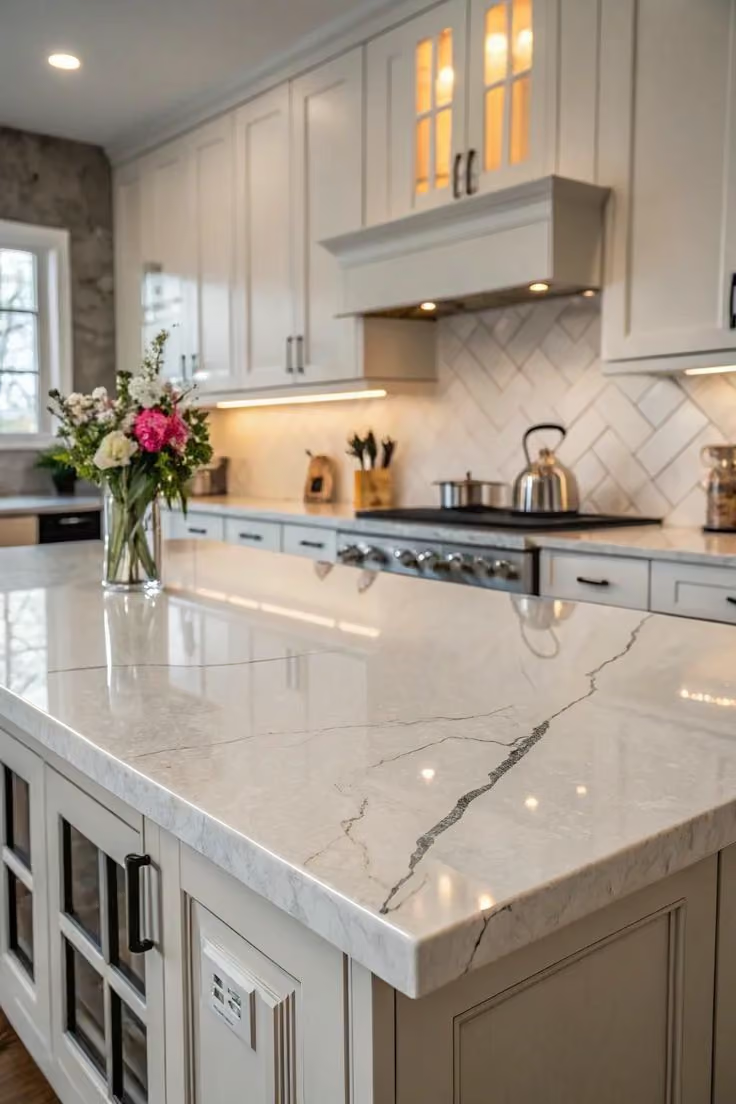
Laminate can scorch or bubble if a hot pan touches it directly, since the surface is essentially a resin coating over particleboard. Quartz handles moderate heat much better, though it's still smart to use a trivet, since sustained high heat can affect the resin binder in quartz too.
Scratch resistance follows a similar pattern. A knife dragged across laminate can leave a visible mark, since the decorative layer is thin. Quartz resists scratching well under normal kitchen use, since the surface is largely made of natural quartz crystal, one of the harder minerals used in countertops.
Water and Stain Resistance
Laminate holds up fine against everyday spills, but water that sits at a seam or edge for too long can cause the particleboard underneath to swell over time. This is one of the most common failure points we see on older laminate counters, especially around the sink.
Quartz is non-porous, so it resists water damage and staining without any sealing required. A busy kitchen with kids, frequent cooking, or regular entertaining holds up to quartz noticeably better over years of daily use. Anyone dealing with a stubborn mark can check removing quartz stains for quick fixes, though quartz rarely needs more than basic soap and water.
Look and Feel
Laminate has improved a lot over the years, and higher-end laminate lines can mimic stone patterns reasonably well from a distance. Up close, though, the surface still feels and sounds different from real stone. A knock on laminate sounds hollow, while a knock on quartz sounds solid, since it's backed by real material rather than a thin layer over particleboard.
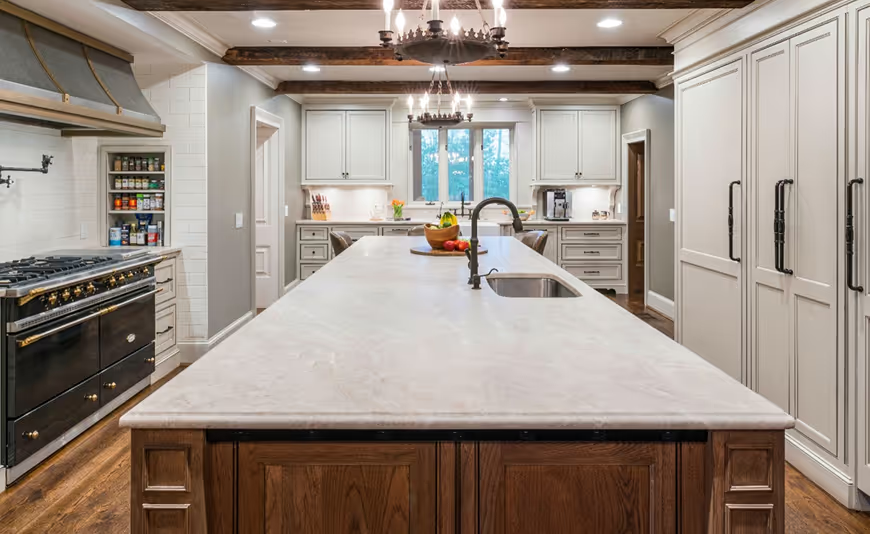
If a natural stone look matters to you, comparing pure white quartz or a bolder patterned option side by side with a laminate version of the same color makes the difference obvious pretty quickly. Reviewing what's trending across countertop materials this year is also a good way to see how far quartz patterns have come.
Resale Value
Laminate is generally viewed as a builder-grade or budget finish by home buyers, which can work against you if you're planning to sell in the next few years. Quartz reads as a genuine upgrade and tends to hold that perception across most price points of home. If resale is part of your decision, quartz is usually the safer investment, even with the higher upfront cost.
When Laminate Still Makes Sense
Laminate isn't the wrong choice for every situation. A rental property, a short-term flip, or a kitchen you plan to fully remodel again within 5 to 7 years can all be reasonable places to stick with laminate rather than spend more on a material you won't keep long term. It's worth being honest about your timeline before assuming quartz is automatically the better financial choice. Reviewing common kitchen and bath remodeling mistakes can help you avoid overspending on a countertop upgrade that doesn't match your actual plans for the home.
Making the Switch From Laminate to Quartz
If you've decided quartz is worth it, the next step is figuring out layout and material before ordering anything. Choosing the right countertop for your kitchen walks through that decision process, and comparing quartz against granite is worth a quick read too, since granite sits in a similar price range and might be worth considering alongside quartz. A real installed pricing example for a typical kitchen is broken down in $45 installed countertops across Northern Virginia, and anyone tempted to install quartz themselves to save money should read the hidden costs of DIY countertop installation first, since quartz is heavy and unforgiving of fabrication mistakes.
Why Homeowners Trust Grace House Studio for This Upgrade
Grace House Studio supplies and installs quartz directly, handling everything from slab selection to templating and final installation as one process. For homeowners moving up from laminate, that matters, since a laminate-to-quartz upgrade often involves adjustments to the cabinet base and sink cutout that a full-service team catches during measuring rather than after the slab arrives.
Start With a Free In-Home Visit
Grace House Studio offers a free in-home visit for anyone weighing laminate against quartz. A team member brings real quartz samples to your kitchen, checks your existing cabinet base and layout, and gives you honest, itemized pricing so you can compare the real numbers before deciding.
Serving Homeowners Across Virginia
Grace House Studio supplies and installs quartz countertops throughout Northern Virginia and Central Virginia, including Alexandria, Arlington, Fairfax, Fredericksburg, and Charlottesville.
Frequently Asked Questions
Can quartz be installed directly over existing laminate?
No. Laminate needs to be fully removed, and in most cases the cabinet base needs to be checked and reinforced if necessary, since quartz is significantly heavier than laminate.
How much heavier is quartz than laminate?
A standard 2-centimeter quartz slab weighs roughly 18 to 20 pounds per square foot, compared to laminate at around 3 to 4 pounds per square foot. This is why cabinet base support matters more with quartz.
Will switching to quartz change my sink or faucet setup?
Not usually, though the cutout may need to be re-templated for a precise fit, since quartz fabrication is more exact than a laminate cutout.
Is there a laminate option that looks close to real quartz?
Higher-end laminate lines have improved significantly and can look convincing in photos, but the difference is noticeable up close and by sound when tapped.
How long does a laminate-to-quartz upgrade take?
Most upgrades take 1 to 3 weeks from final measurement to installation, depending on slab availability and whether any cabinet adjustments are needed first.
Does Grace House Studio help homeowners upgrade from laminate to quartz?
Yes. Grace House Studio handles the full process, from removing old laminate to templating, fabricating, and installing new quartz. Contact us at gracehousestudio.com/contact or call (571) 800-7686 to schedule a free in-home visit.
Explore the full countertop materials selection, then request your free in-home consultation with Grace House Studio at gracehousestudio.com/contact or call (571) 800-7686 to get started.
%20%40dnicoledesignstudio.webp)