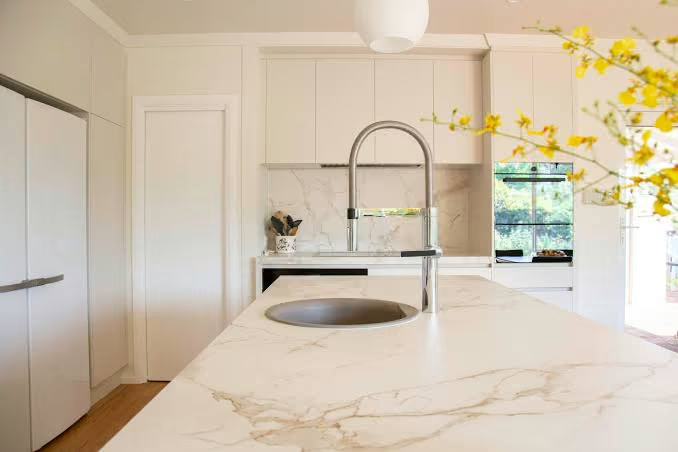
Quartz countertops in the Charlottesville area typically install for around $45 per square foot at the mid-range tier, but that single number hides three separate costs: the slab itself, fabrication (cutting, edging, and seaming), and installation labor. Budget quartz runs closer to $35 per square foot installed, while premium and designer slabs can push past $85 per square foot once fabrication complexity is factored in. Understanding what each layer actually costs is the difference between comparing quotes accurately and guessing.
Charlottesville homeowners often come to us having seen a $45 per square foot figure online and assume it applies to every quartz option on the market. It doesn't. That number is a useful mid-range anchor, but it moves substantially depending on which of three cost layers you're pricing.
If quartz is the direction you're leaning, Grace House Studio sources the slabs and fabricates the countertops for Charlottesville-area kitchens directly, so the pricing above reflects work we quote and install ourselves.
What's Actually Included in a Quartz "Installed" Price?
An installed price bundles three distinct costs into one number: the raw slab (what the fabricator pays a distributor per slab, passed through to you per square foot), fabrication (cutting the slab to your template, polishing edges, cutting sink and cooktop openings, and seaming multiple pieces together), and installation (transporting and setting the finished counters, sealing seams, and final leveling). Slab cost is the most variable of the three since it depends entirely on the quartz line and color you choose, while fabrication and installation costs stay relatively consistent regardless of which quartz you pick, since the labor involved is similar across most standard-thickness slabs.
Why Does Quartz Pricing Vary So Much Between Brands and Colors?
Quartz pricing tracks the complexity of the pattern and the exclusivity of the color line. Solid, uniform colors are the least expensive to manufacture and are typically classified in a supplier's entry-level group. Veined patterns designed to mimic marble, especially bold, high-contrast veining like Calacatta or Statuario styles, cost significantly more because they require more precise slab matching to keep the veining continuous across seams. Our guide on Statuario quartz pricing in Virginia breaks down exactly how much of that premium comes from the slab itself versus the extra fabrication time needed to align veining at seams.

Low, Mid, and Premium Quartz: What Each Tier Actually Costs
- Budget tier ($35 to $45 per sqft installed): solid colors and simple speckled patterns, standard edge profiles, minimal seam matching required
- Mid-range tier ($45 to $60 per sqft installed): most popular marble-look patterns, standard to mitered edge options, moderate seam matching
- Premium tier ($60 to $85+ per sqft installed): designer veined patterns, waterfall edges, large-format slabs that minimize seams, and specialty finishes like honed or leathered surfaces
A typical Charlottesville kitchen with 40 to 50 square feet of counter space lands between $1,600 and $4,250 depending on tier, before considering an island or waterfall edge treatment, which adds separately.
How Does Fabrication Complexity Change the Final Number?
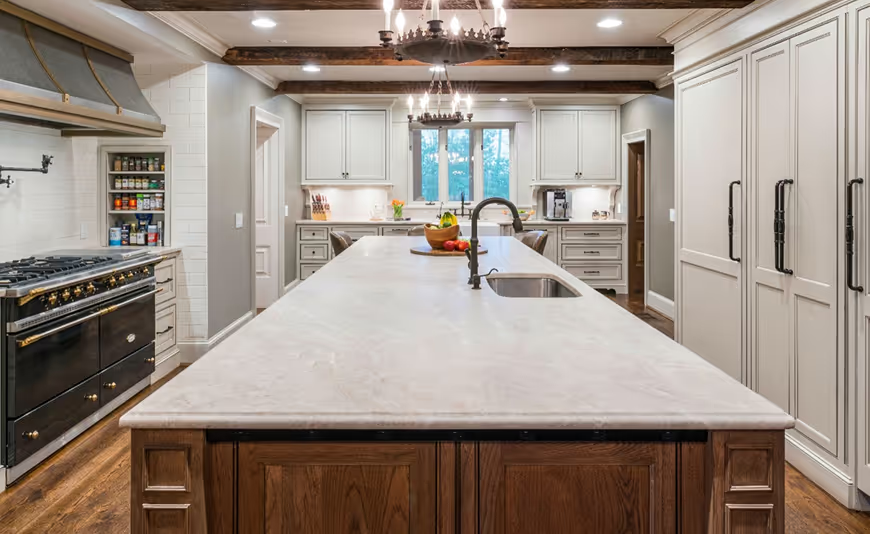
Fabrication cost climbs with every deviation from a simple rectangular counter. A straight run with a standard edge and one sink cutout is the baseline. Add a waterfall edge on an island, and you're paying for roughly double the visible slab plus the mitered seam work to make the corner look seamless. Add an undermount sink versus a drop-in, and fabrication time increases for the precision cutout and polished edge around the opening. A cooktop cutout, decorative edge profile beyond standard eased or bullnose, or multiple seams to accommodate an unusual layout all add incrementally, typically $200 to $800 per feature depending on complexity.

Quartz vs. Granite vs. Quartzite: How Does Cost Compare?
Quartz sits in a similar overall price range to mid-to-high-end granite, but the two materials price differently within that range. Granite as a natural stone has cost driven almost entirely by slab rarity, common granites can be less expensive than budget quartz, while rare granites can exceed premium quartz. Quartzite, a natural stone often confused with quartz because of the name, tends to run higher than both on average due to more difficult fabrication (it's harder than granite) and more limited slab availability. Our quartz vs. granite guide and quartz vs. quartzite comparison go deeper into durability and maintenance differences beyond just price if you're still deciding between materials.
Should I Consider Prefabricated Quartz to Save Money?
Prefabricated quartz counters, pre-cut standard sizes rather than fabricated to your exact template, can save 15 to 25 percent on a straightforward kitchen layout, but the tradeoff is fewer configuration options and more visible seams on larger runs. It's a reasonable way to reduce cost on a smaller or simpler kitchen, but it works less well for kitchens with an island, an unusual layout, or waterfall edges where custom fabrication is doing real work. Our prefab vs. custom countertops guide walks through which kitchens are good fits for each approach.
How Does Slab Waste Affect What You're Actually Paying For?
Quartz is sold by the full slab, typically around 120 to 130 square feet, and fabricators price your project based on how many slabs your layout requires, not just your finished counter square footage. A compact, efficient kitchen layout can often be cut from a single slab with minimal waste, while an L-shaped or U-shaped kitchen with an island frequently requires a second slab even if the total finished square footage would technically fit within one, simply because of how the pieces need to be cut and matched for grain or veining continuity. That second slab is billed in full even though a significant portion becomes offcut waste, which is one of the less obvious reasons two kitchens with similar total square footage can price differently. Asking your fabricator how many slabs your specific layout requires, and whether any leftover material can be used for a small bathroom vanity top, is a practical way to get more value out of the same purchase.
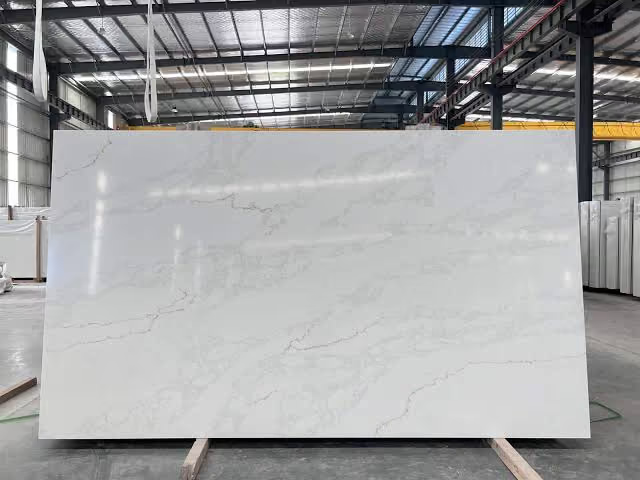
Does Kitchen Layout Shape Change Fabrication Pricing?
Yes, meaningfully. A single straight run is the least expensive layout to fabricate since it requires the fewest seams and the least precise alignment work. An L-shaped counter typically adds one seam, a U-shaped layout adds two, and each additional seam adds both material handling time and the skilled labor required to align pattern and veining across the joint so it reads as continuous rather than mismatched. Homeowners planning a kitchen island in addition to a perimeter counter should expect at least one additional seam connecting the two areas unless the island is small enough to cut from a single remnant piece, which is occasionally possible depending on what's left over from the main counter's slab.
What Homeowners Are Telling Us
Charlottesville and Earlysville homeowners frequently tell us they were surprised how much of their quote came from fabrication rather than the slab itself, especially once an island or waterfall edge entered the plan. A number of Free Union and Barboursville clients have specifically mentioned choosing a slightly less expensive quartz color specifically to afford a waterfall edge or larger island, telling us the overall look mattered more to them than having the "top tier" pattern name. That tradeoff, pattern tier versus layout feature, comes up in nearly every consultation we do for a kitchen island project.
Does Quartz Actually Cost Less to Maintain Than Natural Stone Long-Term?
According to Consumer Reports' countertop material testing, engineered quartz requires no periodic sealing, unlike granite and quartzite, which both need resealing on a recurring basis to maintain stain resistance. Over a ten-plus year ownership period, this maintenance difference is a real, if modest, cost factor worth weighing alongside the upfront installed price.
How Do I Get an Accurate Quote for My Specific Kitchen?
The most reliable way to get a number that isn't just a range is to have your kitchen templated, since square footage, seam placement, and cutout count are what actually drive the final figure. Our countertop cost calculator is a useful starting point for a rough estimate, and it pairs well with browsing recent local work, our Andino White countertops project and Calacatta Laza countertops installation, both completed in Charlottesville, show how tier and pattern choice play out in a finished kitchen.
For homeowners in Charlottesville, Earlysville, Free Union, or Barboursville who want an exact number rather than a range, our countertop fabrication and installation team can template your kitchen directly, and our countertop materials guide covers the full range of quartz lines we work with regularly.
Frequently Asked Questions
Is the $45 per square foot figure a fair estimate for most Charlottesville kitchens?
It's a reasonable mid-range estimate for a straightforward layout with a popular quartz pattern, but budget or premium tier choices, plus features like waterfall edges, will move the number in either direction.
Does quartz cost more than granite in Charlottesville?
Not necessarily. Common granite colors can be less expensive than budget quartz, while rare granite slabs can exceed premium quartz pricing. The two materials overlap significantly across their price ranges.
How much does an undermount sink cutout add to quartz countertop cost?
Typically $200 to $500 depending on sink size and edge polish requirements around the cutout, compared to a standard drop-in sink cutout.
Is prefabricated quartz lower quality than custom-fabricated quartz?
No, the material itself is identical. The difference is in sizing flexibility and seam placement, not durability or quality of the quartz itself.
How much does a waterfall edge add to an island's countertop cost?
Waterfall edges typically add $800 to $2,000 or more depending on island height and slab matching requirements, since they roughly double the visible slab area and require mitered seam work.
Do darker quartz colors cost more than lighter ones?
Not inherently. Cost is driven more by pattern complexity and brand tier than by color depth alone, though some specialty dark colors with metallic flecking do sit in higher tiers.
How long does quartz countertop installation typically take once templated?
Fabrication typically takes one to two weeks after templating, with installation itself completing in a single day for most kitchens.
Does quartz need to be sealed like granite or quartzite?
No, engineered quartz does not require sealing, which is one of its main maintenance advantages over natural stone.
Can I mix quartz counters with a different material on my island?
Yes, this is a common design choice, often pairing a quartz perimeter with a natural stone or butcher block island for contrast, though it does add a second fabrication and material line to your budget.
What's the best way to compare quotes from different fabricators?
Ask each quote to separate slab cost, fabrication, and installation, and confirm whether cutouts, edge profile, and seam count are itemized the same way, since bundled pricing makes accurate comparison difficult.
%20%40dnicoledesignstudio.webp)