
Cabinet hardware is the jewellery of the kitchen. It's the detail that catches the eye when you walk into the room, the thing your hand reaches for dozens of times a day, and the finishing touch that can either pull an entire design together or quietly undermine it. And yet, for all its visual importance, hardware is consistently one of the last decisions homeowners make — often chosen quickly at the end of a long remodel process when decision fatigue has well and truly set in.
This guide is designed to change that. At Grace House Studio, we believe hardware deserves as much thoughtful attention as your countertops or cabinet finish — because the right choice ties the whole room together, and the wrong choice is the first thing you'll notice every morning for the next decade. Here's how to get it right.
Start With Your Cabinet Style — Hardware Should Follow, Not Fight
The most reliable starting point for hardware selection is the style of your cabinets. Hardware and cabinet design exist in a visual conversation, and the best results come when the two are genuinely complementary rather than in tension.
Shaker cabinets are the most versatile pairing in the kitchen world. Their clean, transitional lines work with everything from traditional cup pulls and bin pulls to sleek, minimal bar handles. If you've gone with shaker doors — the most popular choice in Northern Virginia kitchen remodels right now — you have genuine freedom across most hardware styles and finishes. The decisions narrow down to finish and size rather than style compatibility.
Flat-front and slab cabinets call for hardware that matches their minimalist character. Long, thin bar pulls in a single clean finish — brushed nickel, matte black, or brushed gold — work best. Ornate or traditionally styled hardware on a flat-front cabinet creates a jarring visual mismatch that undermines both elements. When in doubt, go longer and simpler.
Raised panel and more traditional cabinet profiles suit hardware with more visual weight — bin pulls, cup pulls, and knobs with decorative backplates all feel at home here. These styles are less common in contemporary NoVA kitchens but appear regularly in homes with more traditional architectural character.
Our guide to trending cabinet styles in Northern Virginia covers the full range of door profiles currently popular in the region — worth reading before finalising both your cabinet and hardware selections together.
The Finish Decision: The Most Visually Impactful Choice You'll Make
If cabinet style determines the shape and form of your hardware, the finish determines its personality — and its relationship to every other metal element in your kitchen. This is where the real design thinking happens.
Brushed Nickel: Safe, Versatile, and Everywhere
Brushed nickel has been the default kitchen hardware finish for two decades for good reason. It's genuinely versatile, works with cool and warm palettes, hides fingerprints better than polished alternatives, and coordinates easily with stainless steel appliances. It's a low-risk choice — but precisely because of that, it can read as a little generic in a kitchen that's trying to have a point of view.
If brushed nickel is your instinct, lean into it — just make sure every other metal element in the kitchen (faucet, light fixtures, appliance finishes) is coordinating rather than clashing.

Matte Black: Bold, Graphic, and Surprisingly Versatile
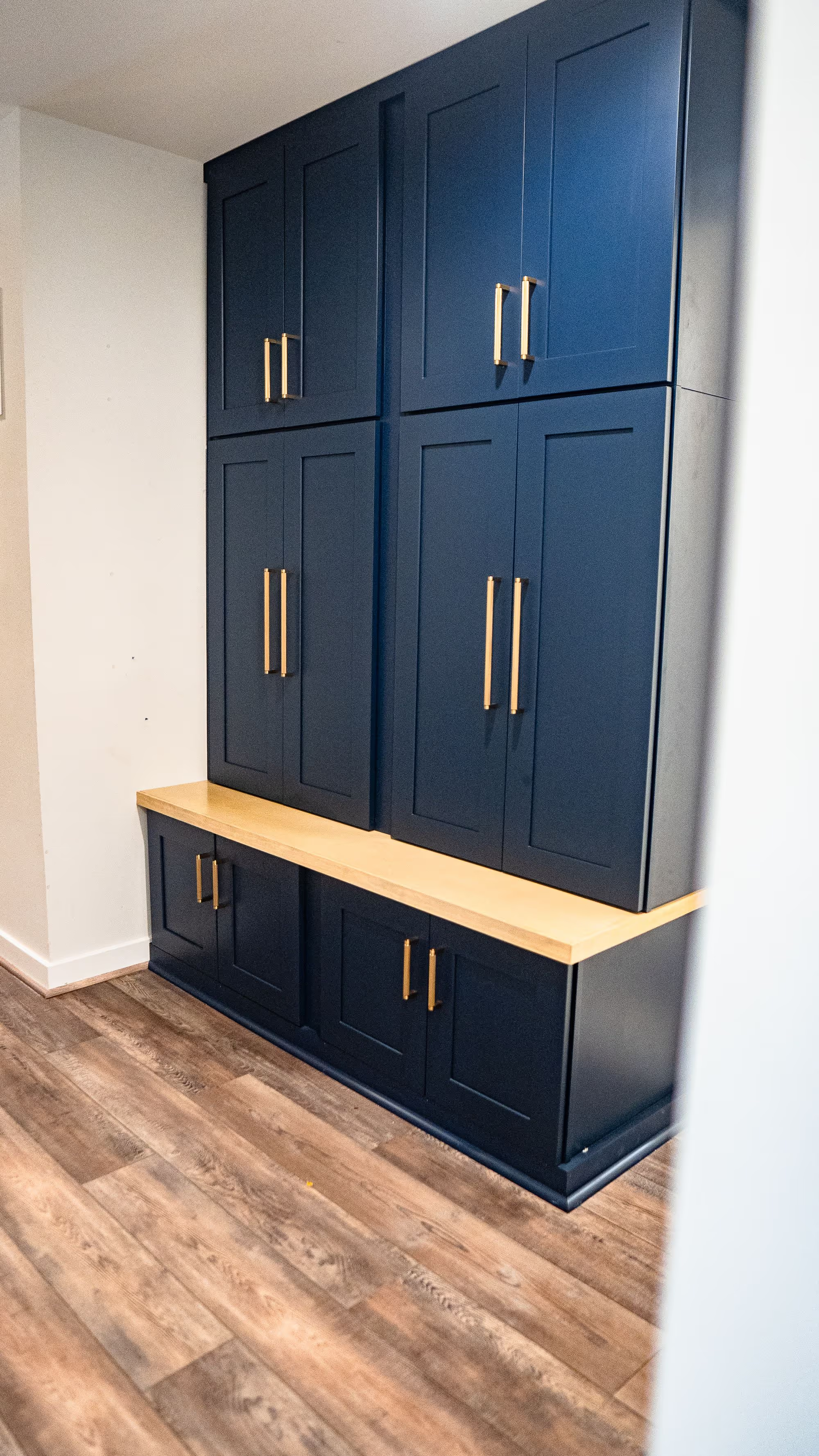
Matte black hardware has moved decisively from trend to mainstream, and it's not hard to see why. Against white or off-white shaker cabinets, matte black pulls create a graphic, high-contrast look that feels confident and intentional. Against dark cabinet finishes — navy, charcoal, forest green — matte black hardware reads as tonal and sophisticated rather than contrasting.
The key with matte black is commitment. It works best when the finish is carried through consistently — faucet, light fixtures, and any other visible metal in the space. Mixed metal approaches can work, but matte black as an accent against a predominantly warm-toned kitchen can feel disconnected.

Brushed Gold and Warm Brass: The Finish Having Its Moment
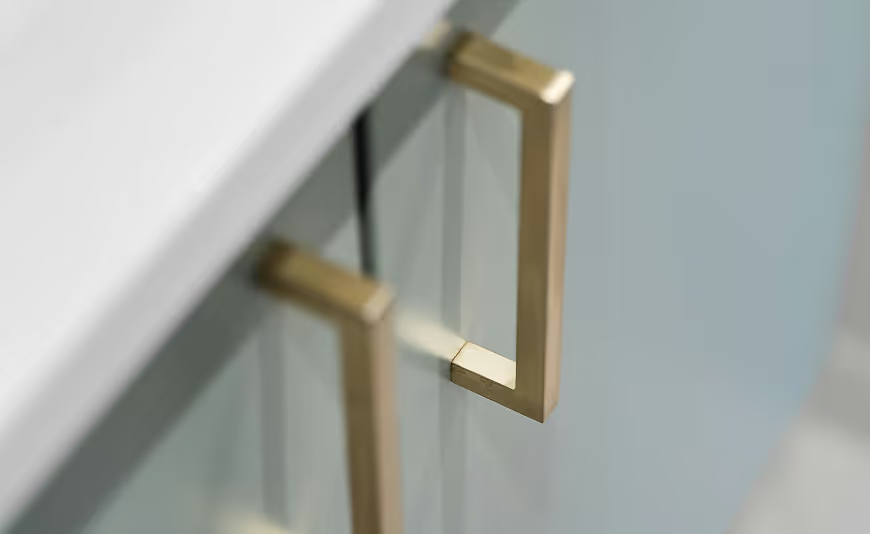
Nothing has transformed kitchen hardware trends in the last three years quite like the return of warm metal tones — specifically brushed gold, satin brass, and unlacquered brass. Against white or cream cabinets, warm brass hardware brings a richness and depth that cool silver finishes simply can't match. Against sage green or earthy-toned cabinets, it's nothing short of perfect.
The distinction between brushed gold and unlacquered brass is worth understanding. Brushed gold is a consistent, stable finish that maintains its appearance over time. Unlacquered brass is a living finish — it develops a patina with age and use, becoming richer and more characterful over years. Homeowners who love the idea of a finish that tells a story of use tend to love unlacquered brass. Those who prefer consistency generally prefer brushed gold or satin brass.

Polished Chrome and Polished Nickel: Classic and Timeless
Polished finishes are less common in contemporary kitchens — the fingerprint issue is real — but in the right context, particularly in kitchens with a more traditional or transitional character, polished nickel has a warmth and luminosity that no brushed finish can quite replicate. It's the hardware equivalent of choosing marble over quartz: more demanding, but genuinely beautiful when it's right.

Mixed Metals: Intentional Is Everything
The question of whether to mix metal finishes in a kitchen is one of the most common we hear at Grace House Studio. The honest answer: mixed metals can work beautifully — but only when the mix is clearly intentional rather than accidental.
The most successful mixed-metal kitchens tend to follow a clear hierarchy: one dominant finish across the majority of hardware, and a secondary finish used deliberately as an accent. Brushed gold cabinet pulls with a matte black faucet and matte black pendant lights works because the contrast is purposeful. Brushed nickel pulls with a chrome faucet, bronze light fixtures, and brass knobs on the pantry simply looks like nobody made a decision.
Browse our hardware collection to see the full range of finishes we carry and how they read alongside different cabinet and countertop combinations.
Size and Scale: The Rules Most Homeowners Don't Know
Getting the finish right and then choosing the wrong size hardware is one of the most common mistakes in kitchen design — and it's entirely avoidable with a few simple principles.
Pulls vs. Knobs: When to Use Each
Knobs work beautifully on doors — upper cabinet doors, lower cabinet doors, and pantry doors. They're typically round or geometric, sit close to the cabinet face, and require a single fixing point. They're also slightly easier to install because alignment is less critical than with a pull.
Pulls are generally better on drawers — particularly wide drawers where a single knob would feel visually unbalanced and functionally awkward. A long drawer pull centred on a wide drawer drawer looks intentional and feels naturally ergonomic.
Combining both — knobs on doors, pulls on drawers — is a classic and reliable approach that most designers default to. It works because the visual distinction reinforces the functional distinction between doors and drawers. If you'd prefer the cleaner look of using only pulls throughout, that works beautifully too — particularly in more contemporary kitchens where visual consistency is a priority.

Getting the Length Right on Bar and Cup Pulls
For drawer pulls, the general guideline is that the pull should be approximately one-third the width of the drawer front. A 24-inch wide drawer looks balanced with an 8-inch pull. A 36-inch drawer — common on wide pan drawers — suits a 12-inch pull or longer. Going too short on a wide drawer makes the hardware look timid; going too long risks looking disproportionate.
On doors, bar pulls are typically sized between 3 and 5 inches for standard upper cabinet doors, and 5 to 8 inches for taller lower cabinet doors. The taller the door, the longer the pull can reasonably be.
One of the most popular current choices in kitchens we're designing at Grace House Studio is the oversized bar pull — 10, 12, or even 18 inches long — used on both doors and drawers for a bold, architectural effect. This works particularly well on flat-front contemporary cabinetry where the hardware is meant to be a deliberate design statement rather than a quiet supporting player.

Placement: Where Hardware Goes Changes How the Kitchen Feels
Even the most beautiful hardware can look awkward if it's placed incorrectly. There are standard placement conventions worth understanding — and a few creative deviations worth considering.
Standard Placement for Doors
On upper cabinet doors, pulls are typically placed on the bottom corner of the door — positioned so your hand naturally falls to the pull when reaching up to open. On lower cabinet doors, pulls sit at the top corner — again, positioned for natural ergonomic reach. Knobs follow the same logic.
The exact distance from the corner varies by preference and door size, but 2–3 inches from the corner edge is a reliable starting point. Consistency across all doors is more important than the specific measurement — the eye notices inconsistency immediately, even when it can't name the cause of the visual discomfort.

Drawer Pull Placement
Pulls on drawers are almost always centred — both horizontally and vertically on the drawer front. The one exception is very tall drawer fronts (typically on pan drawers), where centering the pull vertically can feel too low. In these cases, positioning the pull in the upper third of the drawer front is a more natural ergonomic position.

An Idea Worth Considering: Vertical Pulls on Doors
One of the most distinctive hardware placement choices we're seeing in contemporary kitchen design is the use of vertical bar pulls on cabinet doors — installed vertically rather than the conventional horizontal orientation. On flat-front or shaker cabinets with a clean contemporary character, this creates a strong architectural rhythm across the cabinet run that reads as genuinely distinctive. Paired with two-tone cabinetry or natural wood lower cabinets, the effect is striking.

Coordinating Hardware With the Rest of Your Kitchen
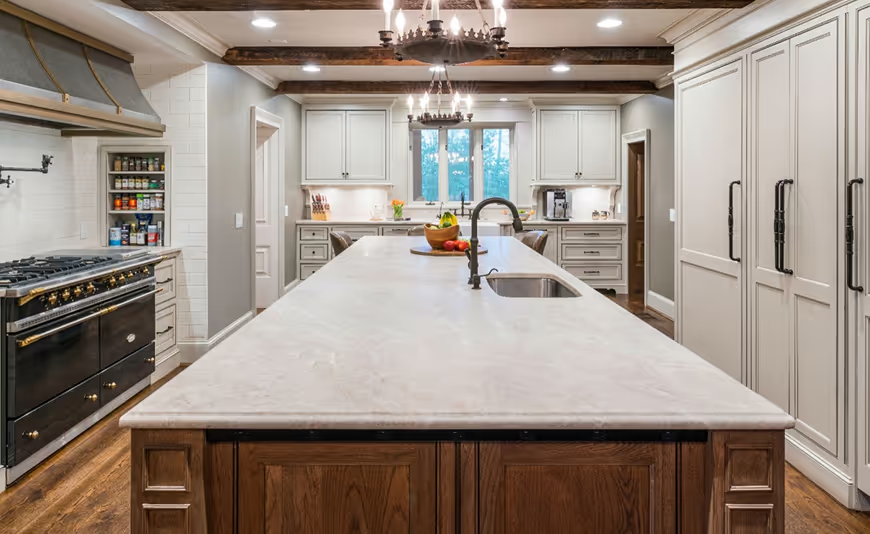
Hardware doesn't exist in isolation — it sits within a complete design system that includes your countertops, backsplash, lighting, appliances, and flooring. The most cohesive kitchens are the ones where every metal element has been considered in relation to every other.
Faucet finish: Your faucet is one of the most visible metal elements in the kitchen and should coordinate directly with your cabinet hardware. Matching finish is the safest approach; deliberate contrast can work if the rest of the scheme supports it.
Light fixtures: Pendant lights over an island and under-cabinet lighting fixtures both introduce metal finishes into the kitchen. These don't need to match your hardware exactly, but they should sit in the same tonal family — warm metals with warm metals, cool metals with cool metals.
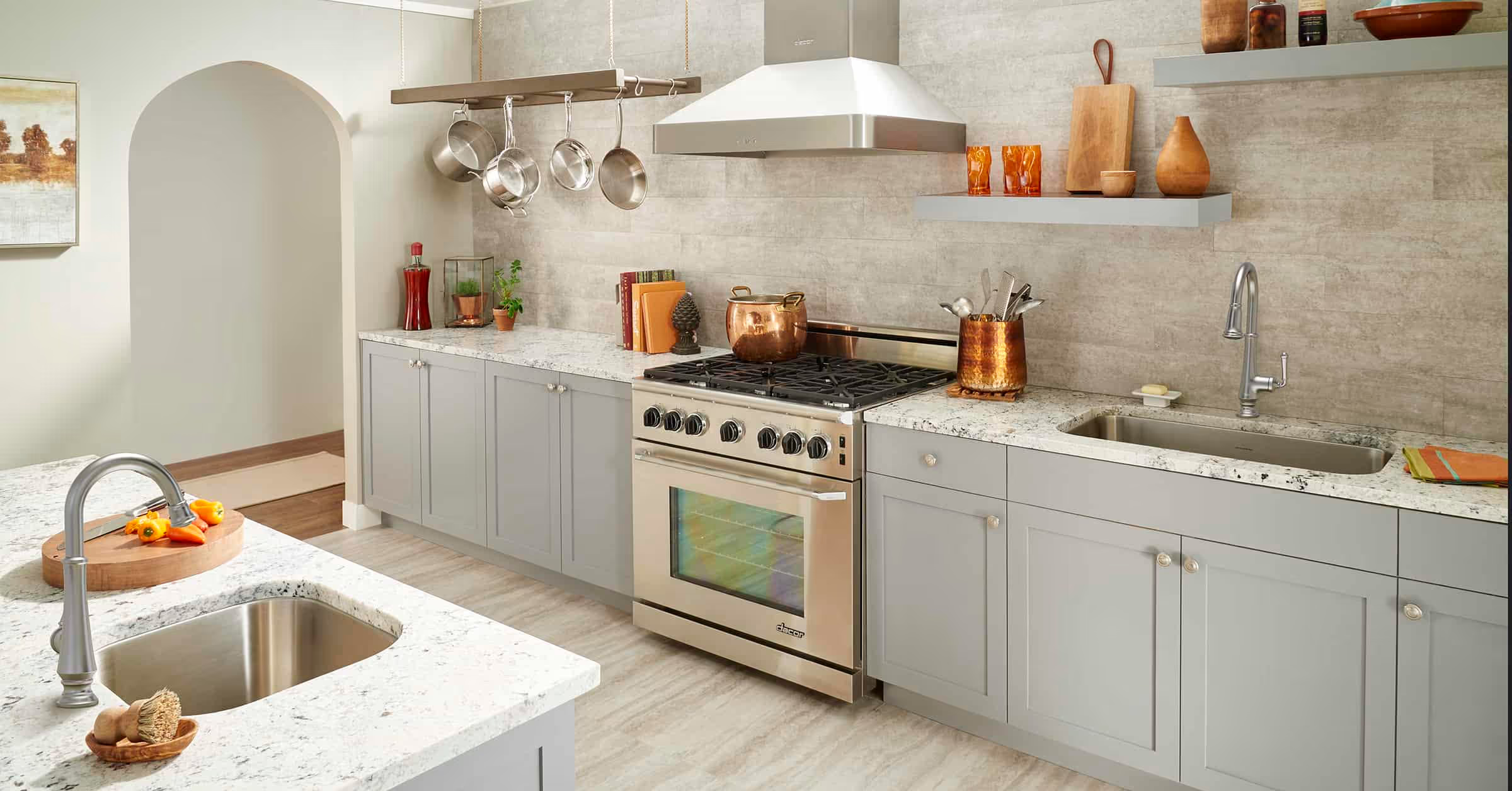
Appliances: Stainless steel appliances coordinate most naturally with brushed nickel and chrome finishes. Black appliances work well with matte black hardware. Panel-ready appliances — hidden behind cabinet fronts — remove this consideration entirely and are increasingly popular in the kitchen remodels we're completing across Northern Virginia.
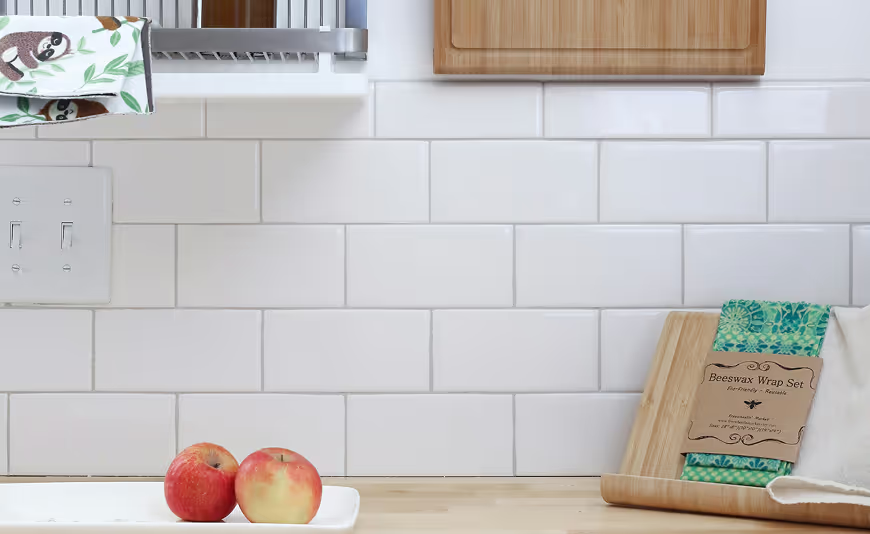
Countertops and backsplash: The undertones in your countertop material and backsplash tile influence which hardware finishes feel harmonious. Warm-toned countertops — cream quartz, golden granite, honey-veined marble — pair naturally with warm brass and gold hardware. Cooler countertops — white quartz with grey veining, Carrara marble, dark soapstone — tend to suit brushed nickel, chrome, and matte black more naturally.

A Practical Checklist Before You Buy
Before placing your hardware order, work through this checklist:
- Have you confirmed the finish coordinates with your faucet, light fixtures, and appliance finishes?
- Have you measured your drawer widths and selected pull lengths accordingly?
- Have you decided on knobs for doors and pulls for drawers — or pulls throughout?
- Have you ordered samples or seen the hardware in person before committing to a full order?
- Have you confirmed the fixing hole spacing on pulls matches your cabinet door drilling (or that your installer can accommodate a new drilling position)?
- Have you ordered a small quantity of extras for future replacements? Hardware lines get discontinued, and matching a pull five years from now can be surprisingly difficult.
Ready to Finish Your Kitchen the Right Way?
Hardware is genuinely the detail that completes a kitchen — the moment where months of planning and investment come together into something cohesive and beautiful. It deserves the same care and attention as every other element in the room.
At Grace House Studio, our design consultation process includes hardware selection as part of a fully coordinated material palette — so your pulls, knobs, faucet, countertops, cabinets, and backsplash are all chosen in relationship to each other rather than in isolation. We bring samples directly to your home through our mobile showroom so you can see exactly how every element works together in your actual space and light.
If you're planning a kitchen remodel in Alexandria, Arlington, Fairfax, or anywhere across Northern Virginia, contact Grace House Studio for a free in-home consultation. We'll help you get every detail right — including the ones most people leave until last.
Grace House Studio | Kitchen Design & Remodeling | Northern Virginia | gracehousestudio.com

%20%40dnicoledesignstudio.webp)